Sizzle and Showmanship: Tracing the Roots of American "Hibachi Culture"
When most Americans think of “hibachi,” they picture a lively dinner: guests seated around a flat iron griddle while a chef flips shrimp, juggles eggs, or lights the famous onion volcano on fire. The aroma of garlic butter sizzling, the steam rising from vegetables, and laughter filling the air all combine to make it more than a meal it’s a shared experience. But while this type of hibachi has become iconic in the U.S., the origins of this “hibachi culture” are less widely known.
Understanding where American hibachi began requires looking back at post-war Japan, the early innovators of teppanyaki cooking, and the visionary chefs who adapted it for American diners.
Hibachi vs. Teppanyaki: Clearing the Confusion
One of the first things to clarify is the terminology. In Japan, a hibachi (火鉢) is literally a “fire bowl.” It’s a small, portable container used for heating rooms or warming tea with charcoal. Traditional hibachi was never intended for large-scale cooking like the tableside shows seen in American restaurants.
What Americans call “hibachi” is almost always teppanyaki (鉄板焼き).
Teppan (鉄板) = iron plate
Yaki (焼き) = grilled or broiled
Teppanyaki refers specifically to cooking food on a flat iron griddle. In Japanese restaurants, chefs may prepare seafood, meats, or vegetables on a teppan, but without the theatrical elements common in the U.S.
The term “hibachi” stuck in America largely due to marketing and ease of pronunciation. By the 1960s, it had become synonymous with the teppanyaki experience, even though technically it was a misnomer.

The Birth of Performance Cooking: Misono in Kobe
The modern concept of teppanyaki cooking using a flat grill for steak, seafood, and vegetables originated in post-WWII Japan.
Misono, a restaurant in Kobe founded in 1945, claims to be the first to serve this style.
The initial audience was largely American military personnel, who preferred grilled meats and were entertained by watching food prepared in front of them.
The Misono chefs developed techniques that combined efficiency with visual performance, but it remained a relatively low-key presentation compared to what Americans now associate with hibachi.
Hiroaki “Rocky” Aoki and the American Hibachi Revolution
The person most credited with creating American Hibachi Culture is Hiroaki “Rocky” Aoki.
In 1964, Aoki opened the first Benihana restaurant in New York City.
His vision went beyond cooking: he transformed teppanyaki into a theatrical dining experience.
Chefs were trained not only to cook perfectly but to entertain guests, turning dinner into a performance.
Signature elements that became standard in American hibachi include:
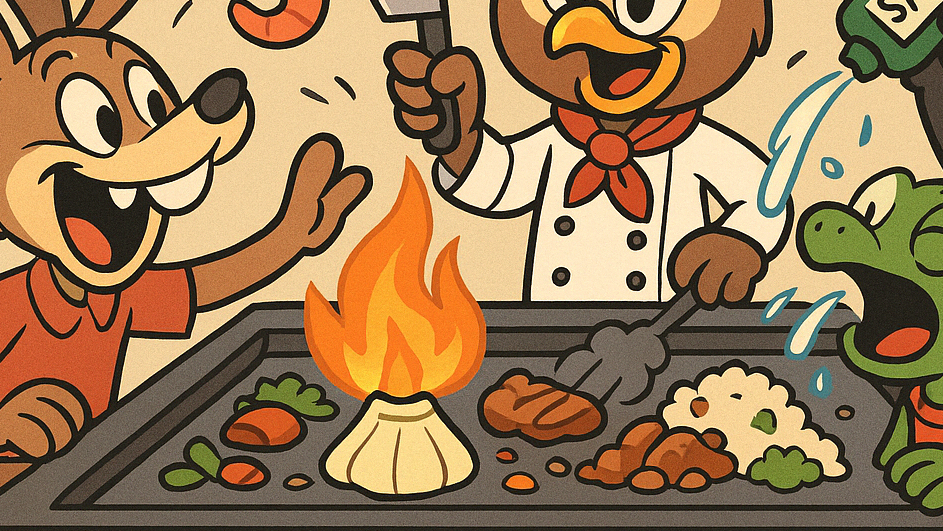
Flaming onion volcanoes
Shrimp tosses and egg juggling
Knife and spatula tricks
Hibachi sake squirts and playful theatrics
Aoki understood that American diners wanted more than a meal they wanted an event. This blend of Japanese technique, Western ingredients (like steak and chicken), and dramatic presentation created the foundation for the hibachi restaurants that Americans know and love today.
Adapting Japanese Cooking for American Palates
American hibachi differs from traditional Japanese teppanyaki in a few important ways:
Generous Use of Butter and Garlic
Unlike traditional Japanese dishes that often favor subtle seasoning, American hibachi leans into bold flavors. Garlic butter became a staple for steaks, chicken, and shrimp, giving diners a rich, familiar taste.
Signature Sauces
Yum Yum sauce, ginger sauce, and teriyaki sauce were adapted or invented to suit American tastes. They complement proteins and fried rice, creating the iconic flavors diners expect today.
Focus on Proteins
While vegetables are included, American hibachi prioritizes steak, chicken, shrimp, and salmon. Ingredients are cooked to order on the flat-top grill to ensure freshness and flavor.
This adaptation helped American hibachi flourish. Guests received food they loved while being entertained with showmanship, creating a new cultural phenomenon.
The Role of Showmanship
American hibachi is defined as much by the performance as the food.
Chefs are trained in knife skills, spatula tricks, and timed sequences that synchronize cooking with audience engagement.
Spectacular tricks, like onion volcano flames and shrimp flips, encourage laughter and interaction among guests.
The show fosters communal engagement, making it perfect for birthdays, family dinners, or corporate gatherings.
Unlike a traditional Japanese teppanyaki meal, the American version emphasizes:
Entertainment for the whole table
Memorable experiences for kids and adults alike
Interactive participation in the cooking process
Guests feel like they are part of the event rather than passive observers.
Why the Experience Endures
Even decades later, American hibachi remains popular because it combines:
Fresh, cooked-to-order food – Steak, shrimp, chicken, and vegetables prepared live.
Social dining – Guests share a central experience rather than sitting apart.
Theatrical flair – Performance elements make the meal unforgettable.
Accessibility – Restaurants and at-home setups bring hibachi to audiences nationwide.
It’s no longer just a novelty it’s a way to celebrate milestones, family gatherings, and special occasions in a memorable way.
Bringing Hibachi Home
Today, many Americans want the same hibachi entertainment at home. Private chefs bring:
Full teppanyaki grill setups
Fresh ingredients and proteins
Knife and spatula tricks, onion volcanoes, and playful performances
Meals customized for guests’ dietary preferences
Whether it’s a birthday, anniversary, corporate event, or family reunion, at-home hibachi allows full control over timing, menu, and environment all while delivering the showmanship Americans love.
How Hibachi Became One of America's Favorite Dining Experiences
By the 1970s and 1980s, hibachi restaurants were opening across the United States. What started as a unique concept in a handful of cities quickly became a dining experience people actively sought out for birthdays, anniversaries, family dinners, and celebrations.
Unlike traditional restaurants where food arrives from a kitchen hidden behind swinging doors, hibachi put the cooking process at the center of the experience. Guests could watch every ingredient hit the grill, hear the sizzle, smell the aromas, and interact directly with the chef.
This level of engagement helped create a dining format that felt personal and memorable. Instead of simply eating a meal, people became part of the experience.
The Evolution of American Hibachi Menus
As hibachi restaurants expanded throughout the country, menus evolved to match local tastes and preferences.
Steak quickly became one of the most popular menu items. American diners appreciated watching a chef prepare a perfectly seared cut of beef right in front of them. Chicken and shrimp soon became equally popular choices because they cooked quickly and paired well with vegetables and fried rice.
Over time, restaurants introduced additional options such as:
Filet mignon
Lobster tails
Salmon
Scallops
Combination plates
Vegetarian meals
The goal was simple. Give guests plenty of choices while keeping the cooking process entertaining and interactive.
Today, many people consider steak, chicken, shrimp, vegetables, fried rice, and signature sauces to be the essential components of the American hibachi experience.
Why People Still Love Hibachi Today
Dining trends come and go, yet hibachi has remained popular for decades.
One reason is that it appeals to multiple generations at the same table.
Children enjoy the excitement of the chef's performance. Teenagers often love the social atmosphere and interactive games. Adults appreciate the food quality and entertainment. Older guests enjoy seeing family members gathered around one table sharing a meal together.
Few dining concepts successfully connect so many age groups at once.
Another reason for hibachi's lasting popularity is consistency. Guests know they can expect fresh food, skilled cooking, and a fun experience every time they visit.
Whether someone is celebrating a birthday, anniversary, graduation, promotion, or retirement, hibachi naturally fits the occasion.
The Rise of Private Hibachi Experiences
In recent years, another trend has emerged.
Instead of visiting a restaurant, many families now bring the hibachi experience directly to their homes.
Private hibachi events allow guests to enjoy everything they love about traditional hibachi while eliminating many of the challenges associated with restaurant dining.
There are no crowded waiting areas.
There is no need to coordinate multiple vehicles.
There are no parking concerns.
There are no rushed reservation times.
Instead, guests enjoy the experience in a familiar and comfortable environment.
This shift became especially popular as people began looking for more personalized celebrations and private gatherings.
What Makes At-Home Hibachi Different?
At-home hibachi combines restaurant-quality cooking with the convenience of private entertaining.
Professional chefs arrive with:
Teppanyaki grills
Fresh ingredients
Cooking equipment
Serving supplies
Entertainment elements
The chef prepares the meal directly in front of guests while performing many of the classic tricks people associate with hibachi dining.
Popular highlights include:
Onion volcanoes
Egg tosses
Knife skills
Spatula tricks
Interactive guest participation
The atmosphere feels more relaxed because guests are surrounded by friends and family rather than strangers.
For hosts, the experience is even better because there is no cooking, serving, or cleaning required.
Planning Your Own Hibachi Gathering
If you are considering hosting a hibachi event, a little planning can help maximize the experience.
For smaller groups, a guest count between 10 and 20 people often creates the best atmosphere. Everyone can comfortably see the grill while still feeling involved in the performance.
For larger gatherings, multiple cooking stations may be useful to ensure all guests receive food promptly.
Outdoor patios, backyards, and covered entertainment areas typically work very well. Indoor spaces such as garages or large recreation rooms can also provide excellent alternatives when weather conditions change.
A U-shaped seating arrangement is often recommended because it gives every guest a clear view of the chef and cooking surface.
These simple adjustments help create a more enjoyable experience for everyone attending.
How Hibachi Continues to Evolve
While the core concept remains the same, hibachi continues adapting to modern preferences.
Many private chefs and catering companies now offer:
Vegetarian options
Vegan meals
Gluten-free menus
Allergy-friendly preparations
Premium seafood selections
Customized event packages
This flexibility allows more people to enjoy the experience regardless of dietary preferences or event type.
What began as a unique adaptation of Japanese cooking techniques has grown into one of America's most recognizable interactive dining experiences.
So, Where Did Hibachi Originate?
The answer depends on which version of hibachi you're discussing.
Traditional hibachi originated in Japan as a charcoal heating device used in homes.
Teppanyaki cooking also originated in Japan and was developed into a restaurant concept following World War II.
However, the hibachi experience most Americans recognize today was largely shaped by Hiroaki "Rocky" Aoki and Benihana in the United States during the 1960s.
The combination of Japanese cooking techniques, Western ingredients, theatrical chef performances, and interactive dining created something entirely new.
It became a cultural phenomenon that continues to entertain millions of people every year.
Understanding this history helps explain why hibachi remains so popular. It is not just about food. It is about bringing people together around a shared experience.
Experience the Tradition for Yourself
Today, the spirit of American hibachi culture lives on through private chef experiences, family celebrations, corporate gatherings, birthday parties, and special events across the country.
The combination of fresh food, skilled cooking, and interactive entertainment continues to create the same excitement that made hibachi famous decades ago.
Whether you are celebrating a milestone birthday, hosting a graduation party, planning a family reunion, or simply gathering friends together for a memorable evening, hibachi remains one of the most engaging dining experiences available.
The history may stretch back generations, but the excitement remains just as strong today.
Want to experience the excitement and flavor of this unique Hibachi Culture in the comfort of your own setting? Imagine having a skilled chef entertain your guests with dazzling skills and delicious food cooked right before their eyes. Love Hibachi brings this vibrant dining experience to you with professional private chefs perfect for parties and gatherings. Book through this link and save $20 on an unforgettable event! It’s the perfect way to celebrate the fun and flavor that started decades ago and continues to delight diners today.