


Hosting a hibachi grill at home has become one of the most popular ways to combine dinner and entertainment. Friends and family gather around a sizzling flat-top grill as a professional chef prepares fried rice, vegetables, and proteins while performing knife tricks, onion volcanoes, and interactive cooking techniques.
Unlike traditional catering or restaurant reservations, a private hibachi experience gives you full control over the menu, timing, and guest interaction. Guests can watch their food cooked live while the chef entertains, making every event feel unique and memorable. However, a great hibachi party requires thoughtful planning. From selecting the right space to managing guests, timing, menu choices, and cleanup, each step ensures a smooth and enjoyable event.
This guide will walk you through every stage of hosting a hibachi grill at home, offering actionable advice, planning tips, and examples to help you create an unforgettable experience for your guests.
Hibachi at home has grown in popularity because it solves common hosting challenges. Large gatherings often create logistical headaches:
Restaurant limitations: Tables are limited, especially on weekends or holidays. A party of 15–30 may get split across multiple tables.
Parking and travel: Restaurants in busy areas may have limited parking or require guests to carpool.
Guest management: Children and teens can get restless, making group meals harder to manage.
Complex bills: Splitting checks, handling gratuity, and tracking additional orders can be stressful.
A private hibachi chef removes these problems:
Guests stay together in one space.
Host control over timing, music, and seating.
Fresh food prepared on demand.
Live entertainment that engages all ages.
For families, backyard gatherings, graduation parties, bachelor/bachelorette events, or small corporate dinners, hibachi at home provides both convenience and excitement.

The cooking area is the most important part of the event. A hibachi chef needs a flat, stable, and safe space for the grill. Common options include:
Backyards and patios: Ideal for outdoor events and large spaces.
Driveways or pool decks: Provide ample room for grill setup and guest seating.
Open garages with proper ventilation: Useful for cooler months or limited outdoor space.
Covered outdoor areas: Protects guests and equipment from sun or light rain.
Pro tip: Leave at least 3–4 feet of clearance around the grill for safety and movement. Remove loose decorations or items that could catch fire.
Proper timing keeps the party relaxed:
Guests arrive 20–30 minutes before cooking to socialize and settle in.
Chef setup: 30–45 minutes prior, including grill preheating, ingredient prep, and safety checks.
Cooking & performance: 60–90 minutes, with food served in stages.
Wrap-up and cleanup: 15–30 minutes, depending on group size and chef service.
Timing ensures no one misses part of the performance, and the host can enjoy the gathering rather than managing logistics.
Before planning the menu, determine your guest list:
Total number of guests
Age distribution: children, teens, adults
Dietary restrictions: vegetarian, gluten-free, allergies
Special seating needs for older guests or guests with mobility issues
This helps the chef tailor menu portions, performance interaction, and safety measures.
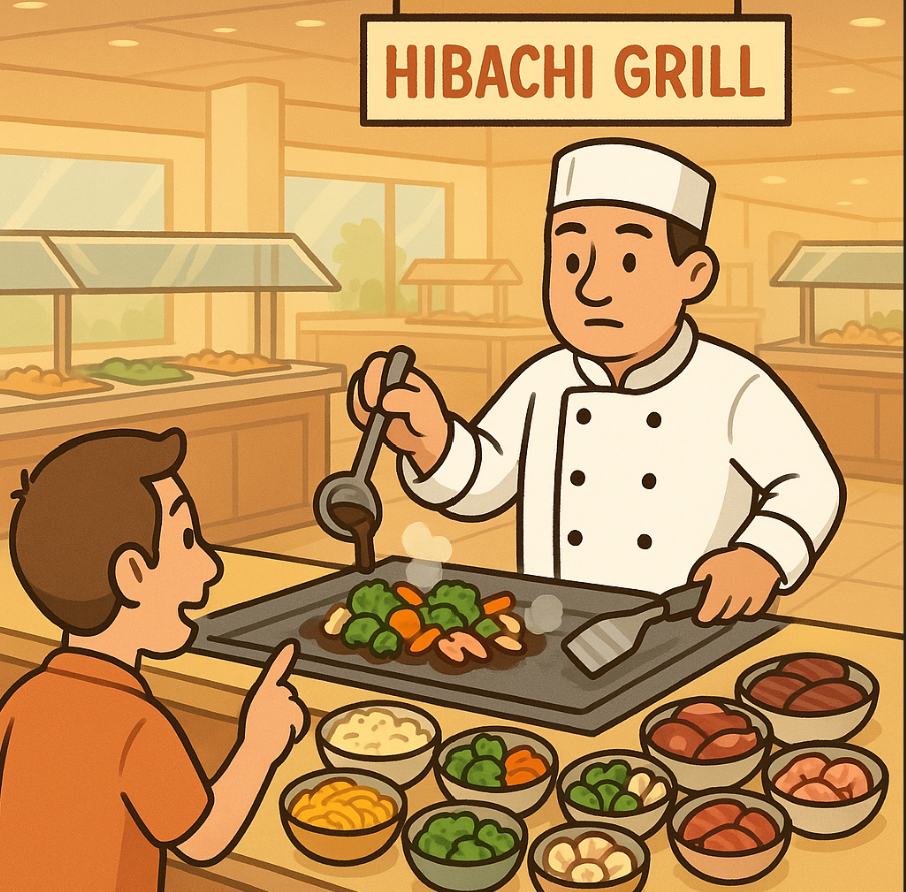
A well-balanced menu should be simple but satisfying:
Staples: fried rice or noodles, grilled vegetables
Proteins: chicken, steak, shrimp, salmon, scallops
Premium proteins (optional): lobster, filet mignon, short ribs
Sauces: garlic butter, yum yum, ginger, teriyaki, soy-based
Tips for different groups:
Children: mild flavors, plain chicken or rice
Teens: add steak or shrimp for excitement
Adults: consider at least two proteins and a premium option
Too many menu options can slow the chef and reduce entertainment impact. Keep the menu focused but flexible.
Before the chef arrives:
Clear the cooking area completely
Move furniture away from the grill zone
Ensure guests have a clear view but are at a safe distance
Check ventilation and lighting for evening events
Confirm parking for chef and equipment
Preparation allows the chef to focus on cooking and entertaining, while guests enjoy the experience uninterrupted.
The centerpiece of any hibachi event is the chef’s performance:
Knife skills and utensil juggling
Onion volcanoes and flame tricks
Egg tricks and ingredient tossing
Interactive engagement with guests
The performance keeps everyone engaged, encourages conversation, and elevates the meal beyond a simple dinner.
Pro tip: Coordinate the performance style with guest ages. Children enjoy playful tricks, while adults may appreciate culinary techniques and explanations.
Cooking on a hibachi grill involves heat and flames:
Keep children and pets at a safe distance
Ensure the grill is stable on a flat surface
Only trained chefs handle propane or fuel
Keep fire safety equipment nearby
Clear communication of boundaries ensures everyone enjoys the experience safely.
Outdoor hibachi events are weather dependent:
Spring & Summer: ideal for evening gatherings; provide shade and hydration
Fall: comfortable evenings; consider lighting for sunset
Winter: indoor garages or covered patios with ventilation can work; confirm safety before the event
Rain or wind: always have a backup plan or alternative cooking location
Planning ahead ensures the event proceeds smoothly, no matter the season.
Guests should be seated to see the grill and performance:
Use a half-circle or U-shaped arrangement
Seat the guest of honor near the center
Provide comfortable seating for children, teens, and adults
Ensure a clear path for the chef to move safely
Proper seating maximizes guest enjoyment and allows everyone to engage with the live cooking.
Once the basic menu is set, consider customizing to elevate the experience:
Premium Proteins: Add lobster tails, filet mignon, or short ribs for adult celebrations or milestone birthdays.
Vegetarian/Vegan Options: Tofu, tempeh, or marinated mushrooms can provide hearty alternatives.
Interactive Elements: Allow guests to select toppings for fried rice or sauces, creating a semi-interactive cooking experience.
Cultural Enhancements: Add sushi, tempura, or specialty Japanese-inspired appetizers for more variety.
Pro tip: Keep customization manageable. Too many options can slow down cooking and reduce the performance’s flow.
Guests may have special dietary needs. Collect this information ahead of time and share it with the chef. Common adjustments include:
Vegetarian or vegan meals
Gluten-free preparation using alternative sauces
Shellfish-free options
Dairy or egg-free meals
Allergies to soy, sesame, or garlic
Advanced planning ensures all guests enjoy the meal safely and inclusively.
A hibachi chef provides entertainment beyond cooking. Hosts can enhance engagement by:
Introducing guests to the chef and explaining the cooking process
Allowing small groups to participate in simple actions under supervision
Scheduling interactive tricks, like tossing shrimp into cups or flipping omelets for children
Encouraging photos and video captures without crowding the chef
This engagement keeps energy high throughout the event.
Before the event:
Clear at least 10×10 feet for grill setup and movement
Ensure stable, flat surfaces
Check fuel or power sources
Verify access for unloading equipment
Prepare seating to optimize visibility and safety
Keep pets and children away from the cooking area
Confirm fire safety measures (extinguisher on hand, water nearby)
These precautions prevent accidents and create a stress-free environment.
One of the major advantages of using a private hibachi service is that the chef often handles cleanup:
Grill breakdown
Removal of cooking tools and utensils
Disposal of food waste
Sanitization of cooking surface
Hosts may only need to manage guest plates, cups, or decorative items. Clear expectations about cleanup should be confirmed during booking.
Booking too late: Reserve the chef early, especially for weekends or holidays.
Choosing a cramped area: Ensure sufficient space for the grill and guests.
Overcomplicating the menu: Stick to 3–5 main proteins and 1–2 sides to maintain smooth performance.
Neglecting dietary restrictions: Collect allergy information in advance.
Ignoring weather: Have a backup plan for rain, wind, or extreme temperatures.
Avoiding these mistakes ensures the event runs smoothly and everyone enjoys the experience.
Can the grill operate on uneven surfaces, grass, or artificial turf?
How does high altitude affect cooking time and grill performance?
What happens if guests arrive late?
Can hibachi be done in a garage, patio, or vacation rental safely?
How much lighting is needed for evening events?
Are cleanup and waste removal included?
What is the best timing for children’s birthdays to maximize engagement?
How far in advance should holiday weekend bookings be made?
These questions are essential for hosts to consider for a flawless hibachi at home event.
Plan your space first: Ensure enough clearance, safe surfaces, and good visibility for guests.
Confirm the menu: Keep options simple, address dietary restrictions, and consider premium proteins for special events.
Manage timing: Coordinate guest arrival, chef setup, cooking, and cleanup for smooth flow.
Engage guests safely: Use interactive elements and tricks while maintaining safe distances from the grill.
Confirm cleanup responsibilities: Clarify what the chef handles and what the host may need to do.
Focusing on these key points ensures a stress-free, entertaining, and memorable hibachi experience at home.
This guide is written for anyone planning their first hibachi grill at home event. Following these steps — from space selection to menu planning, guest engagement, safety, and cleanup — allows hosts to provide a restaurant-quality experience at home. Each event is unique, so adapt guidance to your space, guest count, and specific needs.


Love Hibachi · Private Hibachi Chef Catering · 7am-10pm Daily
Also serving: Boca Raton FL · Brevard FL · Broward FL · Delray Beach FL · Fort Lauderdale FL · Jupiter FL · Miami Dade FL · Orange FL · Orlando FL · Osceola FL · Palm Beach FL · Austin TX · Collin TX · Dallas TX · Denton TX · Ellis TX · Fort Worth TX · Galveston TX · Harris TX · Houston TX · Tarrant TX · Travis TX · More Areas

