

Walk into a Japanese steakhouse in the United States, and it’s common to hear people asking for “hibachi dinner.” You’ll likely see a chef juggling spatulas, flipping shrimp into diners’ mouths, creating a dramatic onion volcano, and searing steak with theatrical precision. It’s an interactive experience that combines food, entertainment, and showmanship. Yet, most diners are unaware that what they are witnessing is usually teppanyaki, not traditional hibachi. Understanding the difference between teppanyaki vs hibachi allows you to appreciate the origins, techniques, flavors, and cultural significance behind each style of Japanese cooking.
The word hibachi (火鉢) literally translates to “fire bowl” in Japanese. Traditionally, hibachi referred to a small, portable heating device used in Japanese homes, dating as far back as the Heian period (794–1185 AD). It was a practical tool designed to provide warmth during the cold months, not a theatrical cooking method. The design typically consisted of an open-topped container made from ceramic, wood, or metal, lined to hold burning charcoal.
Cooking Surface: A metal grate placed over the fire bowl for grilling
Fuel Source: High-quality charcoal, particularly binchotan, for steady heat and subtle smoky flavor
Cooking Style: Suitable for skewered meats or vegetables; simple and straightforward
Atmosphere: Generally intimate and subdued, often family-centered
Limitations: No table-side performance, no complex sauces, and minimal ingredient variety
Traditional hibachi focused on smoky flavor and simple grilling. Ingredients were cooked directly over coals, which imparted a distinctive taste but did not include rice or vegetables cooked together on the same surface. The original hibachi was functional, not performative.
Teppanyaki (鉄板焼き) combines the words “teppan” (iron plate) and “yaki” (grilled or pan-fried). Unlike traditional hibachi, teppanyaki developed as a modern Japanese cooking style in the post-World War II era, designed for entertainment and dining efficiency. Its rise in popularity is closely linked to restaurants like Benihana, which introduced interactive dining to the American market in the 1960s.
Cooking Surface: Large, flat iron griddle capable of handling multiple ingredients at once
Heat Source: Gas or electric burners for controlled, consistent heat
Cooking Style: Versatile; includes searing proteins, stir-frying vegetables, and cooking fried rice directly on the grill
Performance: Chefs entertain guests with knife tricks, onion volcanoes, egg tosses, and flambé flames
Dining Atmosphere: Guests are seated around the grill, creating a shared, interactive experience
Teppanyaki emphasizes both culinary skill and visual performance, allowing diners to enjoy high-quality food while being entertained.
The word "hibachi" (火鉢) literally translates to "fire bowl." Dating back possibly as far as the Heian period (794-1185 AD) in Japan, traditional hibachi were originally heating devices. They consist of an open-topped container, often round and made of ceramic or wood lined with metal, designed to hold burning charcoal.
-The Cooking Surface: For cooking, a grate is placed over the top of the fire bowl. This makes a traditional hibachi grill function much like a small, portable barbecue grill.
-Heat Source: Traditionally, charcoal (especially high-quality binchotan) is the fuel, imparting a distinct smoky flavor.Modern versions, especially those adapted for indoor restaurant use or home convenience, might use electricity.
-Cooking Style: Because of the open grate design, traditional hibachi grilling is best suited for grilling larger pieces of meat or vegetables directly over the coals. It's generally a more straightforward grilling method, focusing on the smoky flavor imparted by the charcoal. It's less about intricate knife work or cooking loose ingredients like rice directly on the surface.
-Atmosphere: Historically used for heating or simple, often intimate grilling, the traditional hibachi experience is typically more subdued than the restaurant spectacle many associate with the name.
"Teppanyaki" (鉄板焼き) combines the words "teppan" (iron plate) and "yaki" (grilled, broiled, or pan-fried). This style of cooking is a more modern invention, gaining popularity in Japan after World War II and introduced to the US, arguably becoming even more famous there.
The Cooking Surface: The defining feature of Teppanyaki is the large, flat, solid iron griddle. This provides a smooth, continuous surface for cooking.
Heat Source: Teppanyaki grills typically use propane or electricity, allowing for consistent and controllable heat across the large surface. This makes them suitable and safer for the indoor, tableside cooking performances they are known for.
Cooking Style: The solid flat-top is incredibly versatile. Chefs can sear meats, sauté vegetables, cook eggs, and even prepare fried rice directly on the griddle. It lends itself perfectly to the theatrical chopping, flipping, and tossing displays that make Teppanyaki dining so entertaining. The focus is often on precise cooking, combined with sauces and seasonings applied during the cooking process.
Atmosphere: Teppanyaki is synonymous with the lively, interactive dining experience.Guests are seated around the grill, watching skilled chefs perform culinary feats, making the meal preparation itself a form of entertainment.
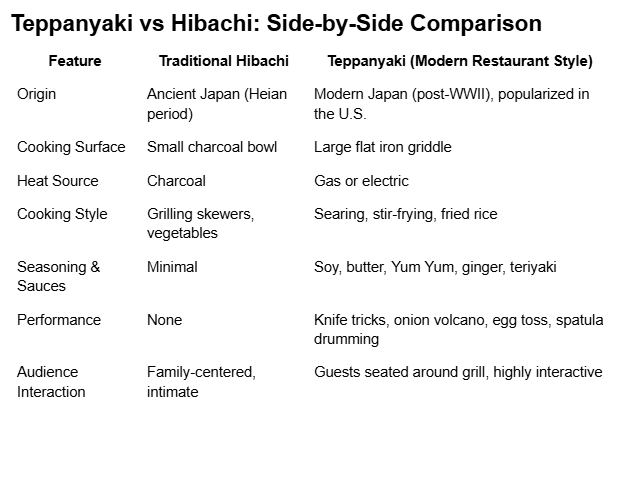
This table clarifies why most American diners confuse hibachi with teppanyaki: the visual spectacle dominates perception, while the historical and technical differences are subtle to casual observers.
So, why do most Japanese steakhouses in America call their Teppanyaki grills "hibachi"? It's largely a matter of marketing and history. When this style of restaurant became popular in the US (Benihana being a key pioneer in the 1960s), the term "hibachi" was likely chosen because it sounded more familiar or exotic to American diners, even though the cooking style was Teppanyaki. Over time, "hibachi" became the commonly accepted term in the US for this theatrical, flat-top grilling experience.
Understanding the difference doesn't change how delicious the food is! If you love that Japanese steakhouse flavor, you have options:
Backyard Grilling: You can find portable grills marketed as a hibachi grill.[2][3][5][6] Some might be closer to the traditional charcoal grate style (great for a smoky flavor on skewers or small items), while others might be small, flat-top propane grills trying to replicate the Teppanyaki experience.[6] Cast iron versions are often recommended for durability and heat retention.[5]
Hibachi Delivery: Craving the taste without the cooking? Many restaurants now offer hibachi delivery. While you miss the tableside show, you can still enjoy expertly cooked steak, chicken, shrimp, fried rice, and those famous sauces delivered right to your door through services like Uber Eats, Grubhub, or DoorDash. Search for "hibachi delivery near me" to find local options.
The Ultimate Experience: To truly capture the magic – the dazzling performance and the delicious food – consider bringing the restaurant experience to your home or event.
For an authentic and entertaining meal that combines skilled cooking with fresh ingredients and those irresistible sauces, booking a private chef service can make any occasion special. If you want the excitement and flavors of the Japanese steakhouse brought directly to you, check out
Experiencing teppanyaki is a multi-sensory event that engages all five senses:
Knife juggling, spatula drumming, onion volcanoes, flames rising from the grill
Presentation of ingredients and final plated dishes
Sizzling proteins and vegetables on the hot griddle
Rhythmic spatula drumming and chef commentary
Gas or electric burner noises complement the live performance
Aroma of seared meats and butter-garlic vegetables
Caramelization of soy sauce and sauces during cooking
Proteins seared to perfection, vegetables crisp-tender
Fried rice enhanced by chef seasoning and sauces
Guests participate in safe tosses, catching shrimp or vegetables in small bites
Interaction adds to the social and entertainment factor
This interactive performance is what sets teppanyaki apart from both traditional hibachi and standard restaurant dining.
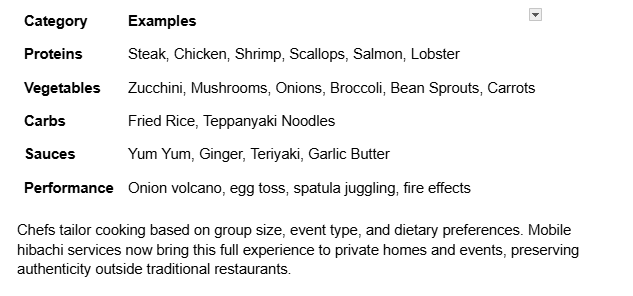
Chefs tailor cooking based on group size, event type, and dietary preferences. Mobile hibachi services now bring this full experience to private homes and events, preserving authenticity outside traditional restaurants.
For those unable to visit a steakhouse, teppanyaki can be brought to homes or event spaces. Features include:
Mobile chefs with commercial-grade flat-top grills
Fresh ingredients and sauces prepared live
Live performance including knife tricks, egg toss, and flaming onion volcanoes
Setup for patios, garages, or indoor dining spaces
Flexible arrangements for small or large groups
Cities like Boise, Meridian, Eagle, Star, and Nampa benefit from this service, allowing families to host interactive Japanese steakhouse experiences at home.
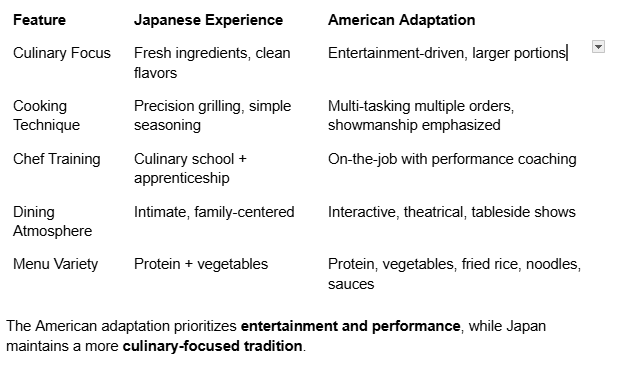
Observe chefs closely: Experience the knife tricks and flame displays safely
Try sauces: Yum Yum and ginger are staples for authentic flavor
Participate when safe: Guests can enjoy tossing vegetables or catching shrimp
Book mobile hibachi: For private celebrations, chefs bring the full experience to your backyard or venue
Is hibachi the same as teppanyaki?
No. Traditional hibachi is a charcoal fire bowl used in homes, while teppanyaki is flat-top grill cooking with a performance element.
Can I replicate teppanyaki at home?
You can cook ingredients on a flat iron griddle, but performance tricks, flames, and interactive dining should only be attempted with trained professionals.
Why do U.S. restaurants call teppanyaki “hibachi”?
Marketing and familiarity drove adoption; “hibachi” sounded more accessible to American diners.
What foods are cooked on a teppanyaki grill?
Proteins (steak, chicken, shrimp), vegetables, fried rice, and noodles. Common sauces include Yum Yum, ginger, garlic butter, and teriyaki.
Are mobile hibachi services safe for home events?
Yes. Professional chefs handle setup, cooking, performance, and cleanup, while following strict safety guidelines.
The teppanyaki vs hibachi distinction highlights both cultural evolution and marketing adaptation. Hibachi reflects traditional Japanese cooking with a charcoal fire bowl, while teppanyaki represents modern Japanese steakhouse dining with performance, precision, and entertainment.
Whether dining in a restaurant, ordering hibachi delivery, or booking mobile hibachi for a private event, understanding this difference enhances appreciation for the cuisine, chef skill, and the immersive dining experience. The next time you enjoy a sizzling teppanyaki grill, you’ll know the history, technique, and flair that make it truly unique.


Love Hibachi · Private Hibachi Chef Catering · 7am-10pm Daily
Also serving: Boca Raton FL · Brevard FL · Broward FL · Delray Beach FL · Fort Lauderdale FL · Jupiter FL · Miami Dade FL · Orange FL · Orlando FL · Osceola FL · Palm Beach FL · Austin TX · Collin TX · Dallas TX · Denton TX · Ellis TX · Fort Worth TX · Galveston TX · Harris TX · Houston TX · Tarrant TX · Travis TX · More Areas

