


When you search for hibachi near me, you are probably looking for more than an ordinary meal. You want a chef to arrive at your home, set up a professional cooking station, prepare fresh food in front of your guests, and turn dinner into an exciting live performance.
Because the experience takes place at your home instead of inside a restaurant, your quote may include a travel fee. Some customers wonder why this fee is necessary, especially when the chef is already being paid for the event.
The answer is simple: mobile hibachi involves transporting an entire restaurant experience—not merely delivering prepared food.
Here is what a hibachi travel fee actually helps cover.
Mobile Hibachi Is More Than Food Delivery
Traditional food delivery usually involves picking up prepared meals and dropping them off at a customer’s door. Mobile hibachi catering is completely different.
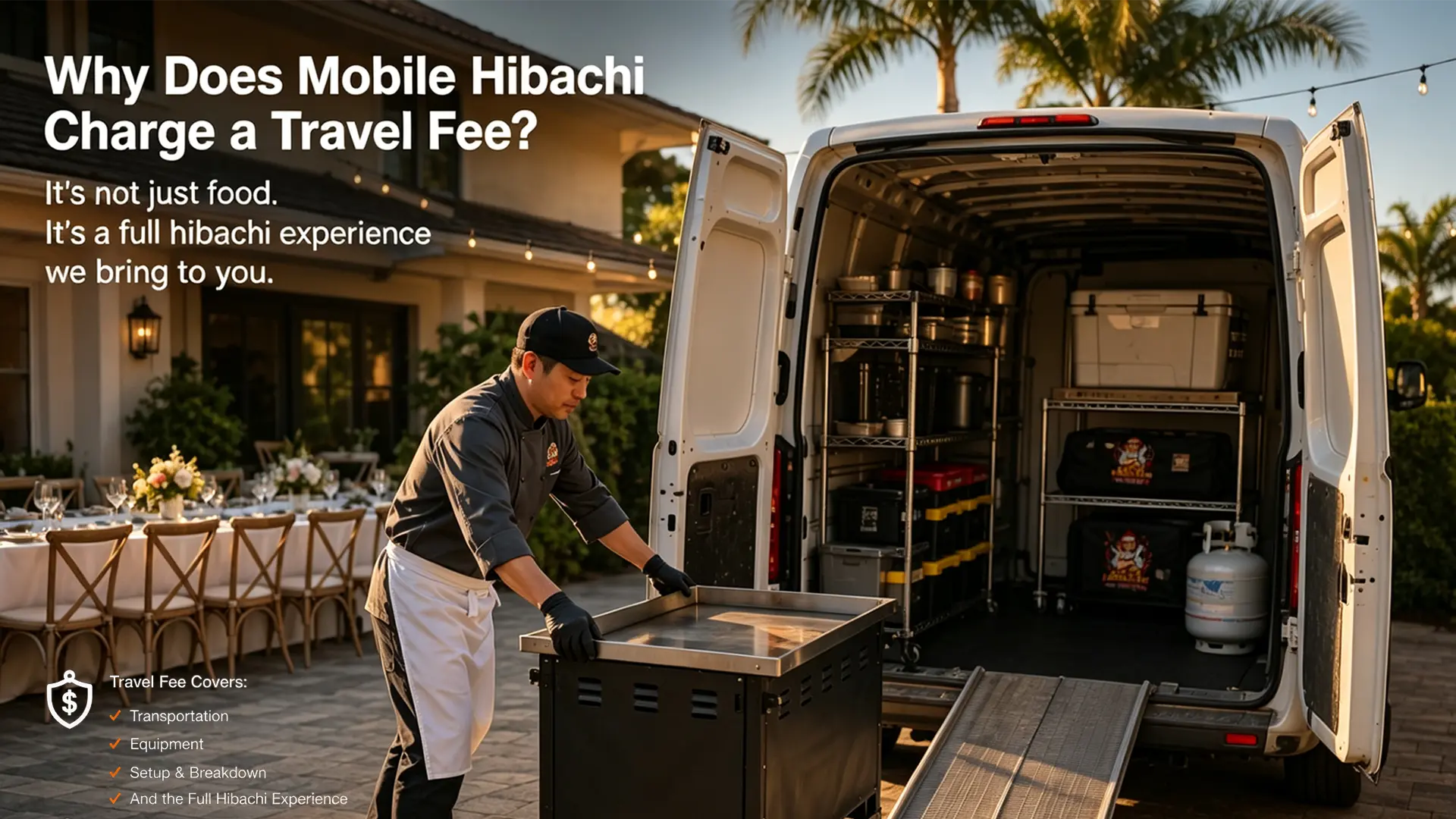
Before your event begins, the chef must prepare, organize, load, and safely transport everything required for the party. Depending on the event, this may include:
- A portable teppanyaki grill
- Propane tanks and cooking fuel
- Safety and fire-control equipment
- Fresh meat, seafood, vegetables, and rice
- Refrigerated coolers and food-storage containers
- Sauces, seasonings, cooking oil, and butter
- Cooking utensils and serving equipment
- Cleaning supplies
- Entertainment items for the hibachi performance
The chef is not arriving with a small bag of food. They are bringing the equipment, ingredients, and tools needed to create a temporary Japanese steakhouse in your backyard, driveway, patio, or event space.
The travel fee helps support the transportation and preparation required to move this complete setup safely from one location to another.
Travel Distance Requires Additional Time
Distance is one of the biggest factors behind a travel fee.
Imagine that a chef must drive 40 miles to reach your event. That distance may require more than an hour of driving in each direction, especially when traffic, weather, road construction, or limited parking is involved.
The chef’s travel responsibilities may include:
- Loading equipment before departure
- Driving to the event location
- Unloading and moving the grill into position
- Setting up the cooking area
- Performing the hibachi service
- Cleaning and packing the equipment
- Driving back to the service area
- Unloading and sanitizing the equipment afterward
A 90-minute party can therefore become several hours of total work.
When you book a mobile hibachi experience, the chef dedicates a specific part of the day to your event. Long-distance travel may also limit the chef’s ability to accept another reservation before or after your party.
The travel fee helps account for this additional time and ensures that chefs can continue serving customers outside their immediate area.
Fuel and Vehicle Expenses Are Part of the Service
Portable grills, propane tanks, coolers, and cooking supplies are heavy. Transporting this equipment requires a suitable vehicle, and that vehicle experiences regular operating expenses.
Travel-related costs may include:
- Gasoline
- Toll roads
- Parking fees
- Oil changes
- Tire replacement
- Brake maintenance
- Vehicle repairs
- Commercial transportation expenses
- Additional staff time
Fuel prices may change, but vehicle maintenance remains an ongoing expense. The farther a chef travels, the greater the transportation cost and the wear placed on the vehicle.
Without a reasonable travel charge, it would be difficult for mobile hibachi companies to provide dependable service to customers in distant neighborhoods, suburbs, rural areas, vacation rentals, and other locations outside the primary service zone.
Fresh Ingredients Must Be Transported Safely
Travel fees also support proper food handling.
Hibachi ingredients are usually prepared and packed before the chef leaves for the event. Meat, seafood, vegetables, sauces, and other temperature-sensitive items must remain properly stored throughout the drive.
Chefs may use:
- Insulated food containers
- Ice packs
- Commercial coolers
- Sealed ingredient trays
- Separate containers for different proteins
- Food-safe transportation equipment
Longer travel distances require more careful planning to maintain food quality and safety. This is especially important for ingredients such as shrimp, salmon, scallops, chicken, steak, and lobster.
The goal is for the food to arrive fresh, properly chilled, organized, and ready to cook when the chef reaches your home.
A Distance-Based Fee Keeps Pricing Fair
Many mobile hibachi services include a certain amount of travel within their standard event price. For example, the first 20 miles may be included, while locations beyond that distance may be charged an additional per-mile fee.
This pricing structure helps keep the service fair for everyone.
A customer located close to the chef’s service area should not have to pay the same transportation cost as someone hosting an event much farther away. A distance-based system allows local customers to receive lower travel costs while still making service available to customers in more remote locations.
It also makes the quote easier to understand because the additional charge is based on the actual distance involved rather than being added randomly.
When requesting a quote, provide the complete event address or ZIP code. This allows the company to calculate the travel distance and give you a more accurate total before you book.
The Fee Supports Reliable Arrival and Setup
Travel planning affects more than driving. It also affects whether the chef can arrive at the correct time and begin the experience as scheduled.
Before traveling, the team may need to review:
- The route to the event
- Expected traffic conditions
- Parking availability
- Gate or security instructions
- Stairs and access restrictions
- Cooking-area location
- Weather conditions
- Equipment transportation needs
For some venues, the chef may need additional time to move equipment from the parking area to the backyard or event space. Vacation rentals, apartment buildings, gated communities, rooftop areas, and large properties can all require extra coordination.
A properly calculated travel fee helps the company assign enough time for transportation and setup instead of rushing the chef from one event to another.
That planning contributes to a smoother and more dependable experience for the host and guests.
Why Not Include Every Travel Cost in the Food Price?
Another common question is why travel is not simply included in the price per person.
Including the maximum possible transportation cost in every menu price would make local events unnecessarily expensive. Customers located only a few miles away would end up paying for transportation expenses they did not create.
Separating the travel fee allows the event price to reflect the food and entertainment, while the transportation portion reflects the actual location of the party.
This creates a clearer and more flexible quote.
Your total may depend on factors such as:
- Number of adults and children
- Protein selections and upgrades
- Additional appetizers or sides
- Number of chefs required
- Event address
- Travel distance
- Local taxes
- Optional services
Providing complete event details helps the company prepare the most accurate estimate.
You Are Paying for Convenience
The greatest value of mobile hibachi is convenience.
Instead of driving to a restaurant, making a reservation, arranging transportation, separating a large group across multiple tables, or managing children in a crowded dining room, the restaurant comes to you.
Your guests can relax in a familiar setting while the chef prepares the meal directly in front of them. The experience can include fire tricks, an onion volcano, food tossing, interactive games, and other entertaining moments.
After the meal, your guests are already at the party location. There is no need to coordinate another destination or move the celebration elsewhere.
The travel fee helps make that convenience possible.
How to Find the Best Mobile Hibachi Service Near You
When searching for hibachi near me, do not compare companies based only on the lowest advertised price. Review what is included in the experience and whether the company clearly explains its travel policy.
Before booking, consider asking:
- How many travel miles are included?
- How is the additional mileage calculated?
- Does the chef bring the grill and cooking equipment?
- Are food, sauces, and entertainment included?
- How early will the chef arrive?
- Are tolls or parking fees included?
- Are there any access requirements for the cooking area?
- Is the travel fee confirmed before the deposit is paid?
A professional mobile hibachi company should be able to explain its charges clearly and provide a detailed estimate based on your event information.
The Travel Fee Brings the Hibachi Experience to You
A mobile hibachi chef does much more than drive to your address. The chef transports a grill, fresh ingredients, propane, cooking tools, safety equipment, and everything needed to create an interactive dining experience at your location.
The travel fee helps cover the additional driving time, fuel, vehicle maintenance, food transportation, labor, and logistical planning involved in serving your party.
The next time you search for hibachi near me and notice a travel charge, remember that you are not paying for ordinary delivery. You are helping bring a complete live cooking experience directly to your home.
It is the transportation behind the entertainment, the preparation behind the performance, and quite literally the fuel that brings the fire to your celebration.

