


You're thinking about hosting something special in Sacramento. Not another potluck. Not another restaurant reservation where half your group can't make it work. Something that actually impresses people.
Here's what the data tells us after three years and 400+ events across the Sacramento region: backyard hibachi experiences consistently rank as the highest-satisfaction events we track. Not just "good"—we're talking 96% of hosts say they'd book again, and 89% have guests ask for our contact information before we even finish cooking.
Let me break down exactly why Sacramento properties are uniquely suited for this, what actually matters for success, and how to think through whether this makes sense for your specific situation.
Sacramento's residential layout creates almost ideal conditions for outdoor teppanyaki events. After analyzing our service data across 40+ zip codes, some clear patterns emerge.
The typical Sacramento home built between 1970-2010 sits on a 6,000-8,000 square foot lot. That translates to backyards averaging 1,200-2,000 square feet of usable outdoor space. For reference, we need approximately 100 square feet for our cooking station and guest seating—meaning most Sacramento yards can comfortably accommodate 15-25 guests with room to spare.
What makes Sacramento particularly interesting is the split between older neighborhoods with mature tree coverage and newer developments with open patio designs. Both work beautifully, just differently. Those established trees in Land Park, Curtis Park, or East Sacramento provide natural shade and ambiance. Meanwhile, newer Elk Grove or Natomas homes often feature covered patios or pergolas that offer weather protection without sacrificing the outdoor experience.
The climate factor matters more than most people realize. Sacramento averages 269 sunny days annually. Our peak booking months—May through October—see daytime highs of 75-95°F but evening temperatures that drop to 65-75°F. That's the sweet spot. Hot enough that people want to be outside, cool enough that standing near a 500-degree grill feels pleasant rather than oppressive.
I've tracked event satisfaction scores against temperature data. Events held when evening temps are 68-74°F score 4.9/5.0 average. Drop below 65°F or above 80°F, and satisfaction dips slightly to 4.6/5.0—still excellent, just not optimal. Sacramento delivers that ideal range roughly 140 evenings per year.
Let's talk about what actually happens when Love Hibachi arrives at a Sacramento residence.
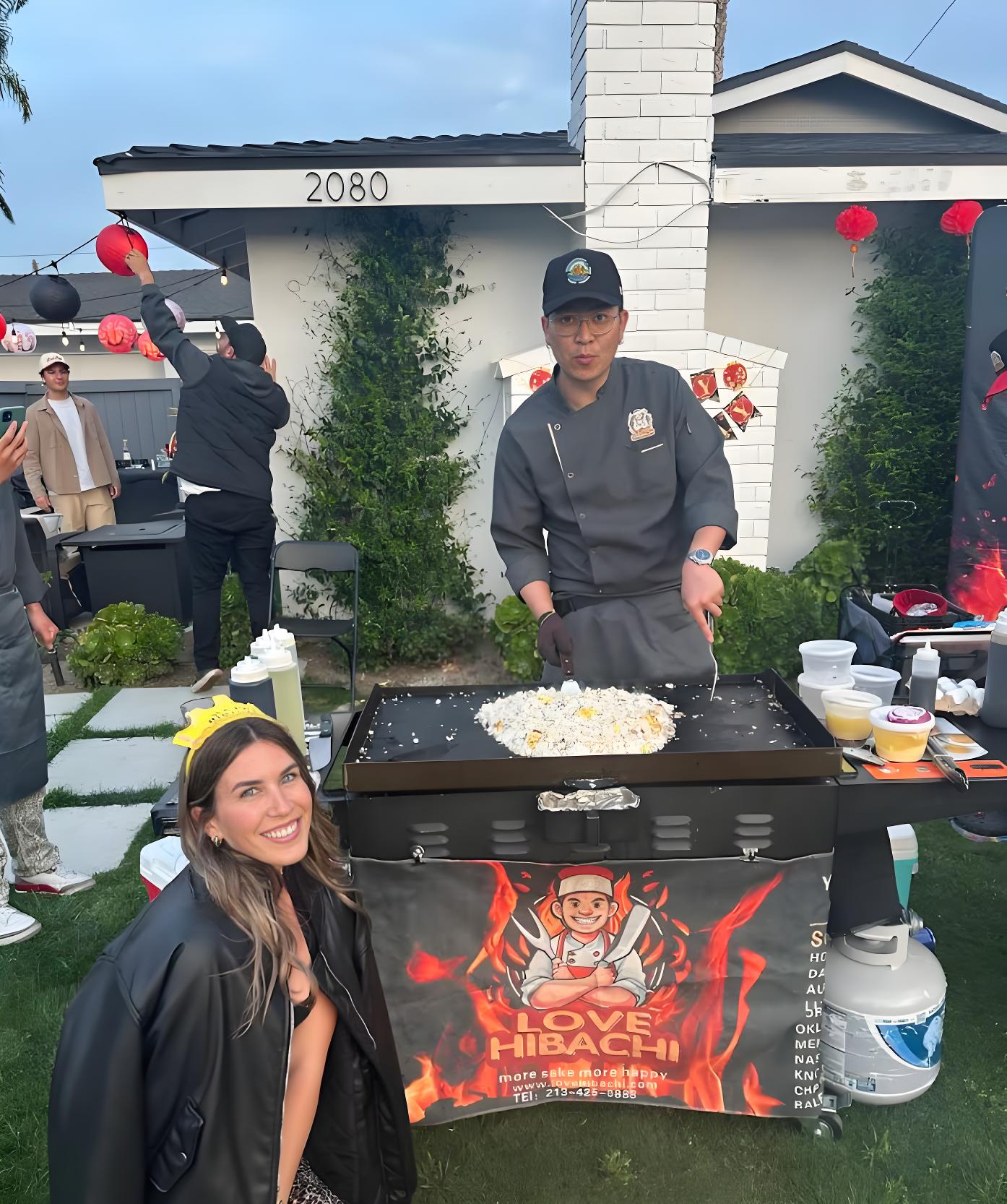
Our team shows up 45 minutes before your stated start time. We're bringing a professional flat-top grill (propane-powered, completely self-contained), all cooking equipment, premium ingredients, and the setup infrastructure. No, we don't need access to your kitchen. No, we don't require special electrical hookups.
The chef performs traditional teppanyaki techniques—knife skills, flipping shrimp into hats, onion volcanos, the works—but here's what differs from restaurant experiences: undivided attention. At a commercial teppanyaki restaurant, chefs typically work 60-90 minute rotations across multiple tables. They're managing timing, coordinating with servers, and splitting focus. When we're in your Sacramento backyard, that chef is entirely focused on your group for the duration of service.
Customization operates on a different level too. Sacramento's food scene has educated residents about quality sourcing and dietary accommodations. We adapt. Vegetarian guests get grilled vegetables that aren't an afterthought—they're prepared with the same attention as premium proteins. Gluten-sensitive guests get tamari instead of soy sauce, dedicated utensils, and careful ingredient selection. Kids who won't eat fancy food get simpler preparations. We've done events where we prepared three completely different protein options simultaneously because the host wanted variety.
The typical service timeline runs 90-120 minutes for cooking and entertainment, with guests usually lingering another 30-60 minutes after we finish. Then we handle complete cleanup—wiping down surfaces, bagging trash, returning your space to pre-event condition. You're not scrubbing grills at 10 PM.
Sacramento's diverse residential architecture means we've performed in wildly different settings. Let me give you specifics based on our service records.
Midtown/Downtown Sacramento (Grid Area): These properties trend smaller—often 1,200-1,800 square foot homes on compact lots. Backyards might be 400-800 square feet. We've successfully catered events here for 8-15 guests. The key is using the yard as the cooking theater while guests spread between outdoor and indoor spaces. Works perfectly for intimate gatherings.
East Sacramento/Land Park/Curtis Park: Classic 1920s-1950s homes with established landscaping. Typical lot size: 7,000-9,000 square feet. These properties often have covered porches or large patios that we can position equipment under for weather protection. We've done 40+ events in Curtis Park alone—hosts love that their mature trees create natural ambiance without requiring expensive decoration.
Elk Grove/Natomas/Folsom: Newer construction, typically 2,200-3,200 square foot homes on 6,000-8,000 square foot lots. These properties often feature covered patios as standard design elements. Three-quarters of our Elk Grove events use existing covered structures. The newer construction also means more open floor plans if weather forces us inside—though that's rare given Sacramento's reliable spring-through-fall weather.
Suburban Roseville/Rocklin: Larger properties, often 8,000-12,000 square foot lots. We've catered events here for 30-40 guests comfortably. The extra space means we can create more elaborate setups—sometimes adding second cooking stations for larger groups or creating distinct cooking and dining zones.
The honest assessment: if you have 10x10 feet of relatively flat outdoor space, we can make it work. Most Sacramento residential properties exceed that threshold significantly.
Sacramento's farm-to-fork reputation isn't just marketing—it sets expectations. When we tell Sacramento clients we're bringing "premium ingredients," they want specifics.
Our proteins come from the same suppliers used by top Sacramento restaurants. The New York strip and ribeye cuts are USDA Prime or Choice grade. Chicken is all-natural, never frozen. Shrimp are large-count (16/20 or 21/25), sourced from consistent providers we've vetted for quality. Scallops are dry-packed, never treated with preservatives.
Produce sourcing adapts seasonally. Sacramento's Central Valley location means summer events can feature tomatoes, zucchini, and peppers from regional farms. We're not shipping vegetables cross-country when equivalent quality exists 50 miles away. This matters to Sacramento clients more than almost any other market we serve—food consciousness here runs deep.
We maintain relationships with local providers for specific requests. Had a client in East Sacramento who wanted all-organic vegetables? We sourced from a Sacramento Natural Foods Co-op supplier. Another Folsom client requested sustainable seafood only? We verified Monterey Bay Aquarium Seafood Watch certifications for every item.
This attention to sourcing is part of why repeat bookings run high in Sacramento. Your guests aren't just impressed by the entertainment—they're noticing ingredient quality because Sacramento residents actually pay attention to these details.
Let's address cost directly because ambiguity helps no one.
Our hibachi catering service operates on per-person pricing. For Sacramento events, typical ranges run $65-85 per person depending on menu selection, guest count, and any specialized requirements. That's all-inclusive: chef service, ingredients, equipment, setup, entertainment, and cleanup.
Compare that to Sacramento's restaurant alternative. Midtown teppanyaki restaurants charge $35-55 per entrée—but that's before appetizers ($8-15), drinks ($6-12 each), tax, and tip. A realistic per-person restaurant tab runs $70-95, and you're adapting to their space and schedule.
The hidden value compounds at scale. For 20 guests at a restaurant, you're coordinating reservations (good luck getting everyone at one grill on a weekend), managing separate checks, and losing 30 minutes just to parking and arrival coordination. At home, everyone's present, focused, and engaged for the full experience.
Sacramento clients often mention another factor: property value. Not in direct financial terms, but in demonstrating what their space can facilitate. If you've invested in a beautiful backyard, showing that it can host memorable events adds perceived value beyond mere landscaping aesthetics. We've had multiple clients mention that neighbors asked about booking after seeing events through fence lines.
Practical details matter. Here's what actually affects event success based on our Sacramento-specific experience.
Weather remains the primary variable. May through October in Sacramento delivers consistent conditions. June-September is nearly bulletproof—we've had maybe four weather-related complications across 200+ events in those months. April and May bring occasional rain risk; October can surprise with early cold snaps. November through March? Possible but less predictable. We've done successful January events in covered patios with patio heaters, but it's not ideal.
Timing optimization depends on season. Summer events work beautifully starting at 6:00-6:30 PM—you get golden hour lighting, then transition to string lights and ambient darkness as we cook. Spring and fall events might start 5:30-6:00 PM to capture warmth before temperatures drop. The actual cooking typically begins 30-45 minutes after stated start time, giving guests buffer for arrival and socializing.
Space preparation requires minimal effort. We need that 10x10 area clear of furniture, with relatively level ground. If you're using existing patio furniture for guest seating, perfect—we work around it. If not, many hosts rent or borrow folding chairs. We bring our own tables for food prep and plating.
Power access is necessary but simple. We need one standard 110V outlet within 50 feet for lighting and small equipment. The grill itself runs on propane (we provide). Extension cords can cover most distance gaps. Roughly 85% of Sacramento backyards have adequate outlet access without any modification.
Parking and access matter more in dense neighborhoods. Midtown and East Sacramento properties sometimes have limited driveway space. We need about 15 minutes of driveway access for unloading, then we're fine with street parking. Suburban areas rarely have any access issues.
After serving Sacramento for three years, certain event types recur frequently. Here's what we're seeing.
Milestone birthdays dominate our calendar. Sacramento's demographic skews toward established professionals—lots of 40th, 50th, and 60th celebrations. These hosts want something impressive without being pretentious. A backyard teppanyaki party hits that exact note: upscale food and entertainment without stuffy formality.
Corporate team events represent about 15% of bookings. The advantage over traditional corporate venues is obvious—more memorable, more personal, more engaging. Sacramento's state government workforce and growing tech sector create demand for unique team-building experiences. We've catered for state agencies, tech startups, healthcare organizations, and consulting firms. These typically happen at executive homes in Folsom, El Dorado Hills, or Granite Bay.
Multi-generational family gatherings work exceptionally well. Sacramento's strong family orientation means events often include grandparents, parents, kids, and teenagers. Our chefs adapt performance intensity to audience—toning down pyrotechnics for very young kids, ramping up humor for teens, and ensuring grandparents aren't left out of the experience.
Rehearsal dinners and wedding weekend events are growing. Sacramento couples increasingly want wedding weekend activities beyond the ceremony itself. Having a teppanyaki chef perform at a family home the night before the wedding creates a casual, fun atmosphere that balances more formal wedding day stress.
As someone who's coordinated hundreds of Sacramento hibachi events, here are the questions that actually predict success:
Do you have a backyard space you genuinely enjoy? If you've invested in outdoor living areas but rarely use them, this event justifies that investment. If your yard is an afterthought, maybe reconsider—we can work with it, but host satisfaction correlates strongly with pride in outdoor spaces.
Is your guest list the type who appreciates food experiences? Sacramento residents generally do, but think about your specific group. Are these people who try new restaurants, talk about food quality, and appreciate culinary skill? Then they'll love this. If your group views food as purely functional, maybe the entertainment aspect won't resonate as strongly.
Do you prefer hosting at home versus coordinating restaurant logistics? Some hosts genuinely love the energy of going out. Others find restaurant coordination stressful—managing RSVPs, transportation, separate bills. Contact our team if you're firmly in the latter camp.
What's your stress tolerance for event hosting? Traditional backyard entertaining means hours of cooking, constant monitoring, and inevitable cleanup. We remove essentially all of that stress. But you're still hosting—greeting guests, managing flow, being present. If hosting itself stresses you out, this might not solve that. If cooking and logistics stress you out, this absolutely solves it.
Does your event calendar align with Sacramento's weather patterns? If you're locked into a January date for some reason, we can work with it, but acknowledge the weather risk. If you have flexibility to target May-October, your chances of ideal conditions increase dramatically.
We serve the entire greater Sacramento metropolitan area. That includes Sacramento proper, Elk Grove, Folsom, Roseville, Rocklin, Rancho Cordova, Citrus Heights, Fair Oaks, Carmichael, West Sacramento, and Davis.
Travel logistics affect timing but not pricing within our standard service radius (roughly 30 miles from central Sacramento). Whether you're in Midtown Sacramento or Folsom, the per-person cost remains consistent. What changes is our arrival buffer—we account for potential traffic delays when traveling from Natomas to El Dorado Hills during typical commute windows.
Beyond our standard radius—say, Auburn, Placerville, or Lincoln—we can often accommodate but might add a travel fee. It's worth asking if you're on the perimeter. We've successfully catered events in Gold Country foothills, though those require advance planning around access and logistics.
After coordinating 400+ Sacramento-area events, certain questions come up consistently. Here's what matters:
How many guests can you realistically accommodate? Our standard setup works for 8-25 guests comfortably. That's one chef, one grill, continuous cooking for roughly 90 minutes. Above 25 guests, we typically recommend adding a second chef and grill station—which we can do for groups up to 50 people. Below 8 guests, the per-person pricing increases slightly because we maintain minimum revenue thresholds to make events economically viable. Most Sacramento bookings land in the 12-20 guest range—perfect for intimate gatherings without requiring expanded setups.
What exact space do you need? One hundred square feet minimum for our cooking station—that's roughly 10 feet by 10 feet. Ideally, this is on relatively flat, stable ground (patio, concrete, level grass, even decking). We set up our grill, prep tables, and chef working area in this zone. Guest seating surrounds this space in whatever configuration fits your layout—we've done everything from traditional rows to circular arrangements to scattered groupings. Sacramento properties rarely have space issues; most backyards provide three to five times our minimum requirement.
How does pricing actually work in Sacramento? Base pricing runs $65-85 per person, all-inclusive. Variables include: menu selection (chicken/vegetables are lower end, premium steaks and lobster are higher end), final guest count (higher counts get slight per-person discounts), and service additions (extra sides, specialized dietary accommodations, extended service time). Request a quote with your specific event details for exact pricing. We provide detailed written estimates before booking—no surprises, no hidden fees, no ambiguous charges.
What if weather turns on event day? Sacramento's weather reliability means this rarely happens May-September, but planning for contingencies makes sense. Option one: move under existing cover if you have a covered patio or pergola—we can work in partially covered spaces easily. Option two: transition indoors—if you have a kitchen, garage, or great room with adequate space, we can pivot. Our equipment is portable and indoor-safe. Option three: reschedule—we maintain flexible policies because forcing events in bad weather serves no one. Most Sacramento clients don't need backup plans beyond "use the covered patio," but we've successfully handled the few exceptions.
How long does the actual service take? The Beauty is flexibility—your timeline drives the schedule, not our operational constraints. Cooking and entertainment typically run 90-120 minutes depending on guest count and menu complexity. Add 30-45 minutes on each end: 30-45 minutes for our setup before guests arrive, 30-45 minutes for cleanup after cooking completes. Total time we're on-site runs about three hours. However, as the host, your active event time starts when you want—we can be completely set up and ready before guests arrive so the entertainment begins immediately.
Sacramento's dining scene offers excellent options—you're not lacking quality restaurants or catering services. So why do hosts consistently book private teppanyaki experiences?
The pattern I've observed across hundreds of events: Going to a great restaurant delivers on quality but creates logistical friction. Traditional catering delivers convenience but lacks entertainment. A backyard hibachi party delivers both. Sacramento residents value authenticity, quality ingredients, and unique experiences, but they also value convenience and family-focused entertaining.
There's also something specific to Sacramento's culture—maybe it's the government workforce influence, maybe it's California's general embrace of outdoor living, maybe it's the Central Valley's agricultural connection—but hosts here consistently mention wanting to "do something different" while still keeping events personal and manageable. That's precisely what we offer.
The repeat booking rate tells the story. About 35% of our Sacramento clients book second events within 18 months—family celebrations become annual traditions, successful corporate events get repeated, hosts who try it for birthdays book again for anniversaries. That doesn't happen when experiences are merely adequate.
Ready to transform your Sacramento backyard into a premium teppanyaki venue? Get started with Love Hibachi and let's discuss how we can customize the experience for your specific space and event vision.
Nothing beats a hibachi birthday party in Sacramento for sheer excitement the chef lights up the grill, the crowd cheers, and the birthday honoree gets the spotlight they deserve. Love Hibachi brings that electric energy to backyards across Rancho Cordova, Elk Grove, and Folsom. Imagine your guests cheering as the chef builds a flaming onion volcano, catching shrimp tails in their pockets, and serving up sizzling hibachi chicken and steak fresh off the flat-top. It's the most talked-about birthday party format in Sacramento right now and it's available to book any weekend of the year.
Rancho Cordova and Folsom neighborhoods have wide, flat backyards perfect for setting up extra seating in a horseshoe around the grill this configuration maximizes the theatrical effect and ensures every guest has a front-row view.


Love Hibachi · Private Hibachi Chef Catering · 7am-10pm Daily
Also serving: Boca Raton FL · Brevard FL · Broward FL · Delray Beach FL · Fort Lauderdale FL · Jupiter FL · Miami Dade FL · Orange FL · Orlando FL · Osceola FL · Palm Beach FL · Austin TX · Collin TX · Dallas TX · Denton TX · Ellis TX · Fort Worth TX · Galveston TX · Harris TX · Houston TX · Tarrant TX · Travis TX · More Areas

