

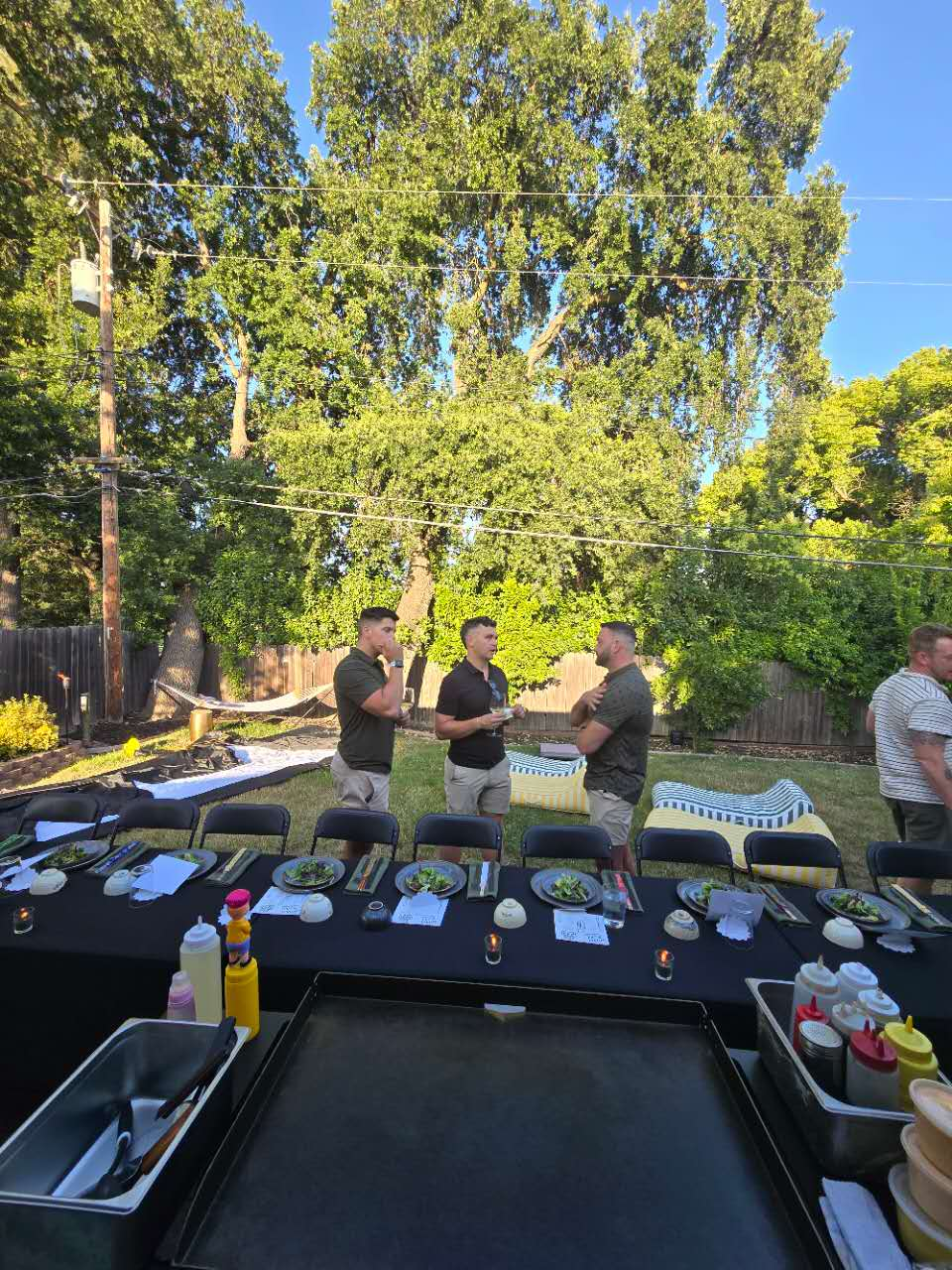
I remember my first event in Noe Valley—the host had spreadsheets detailing every aspect of her daughter's graduation party. Guest dietary preferences, timeline down to five-minute increments, backup plans for the backup plans. She was skeptical about japanese hibachi catering San Francisco at first. "How does this actually work in a 1,200 square foot home?" Two hours into the event, she was relaxed on her couch while our chef entertained 18 guests, and she told me this was the first party in ten years where she wasn't stuck in the kitchen. That transformation happens when you let data inform your decisions rather than assumptions.
San Francisco's approach to dining experiences differs significantly from other markets. This city doesn't just want good food—residents here want transparency, sourcing details, and proof that you know what you're doing.
After analyzing three years of events across San Francisco neighborhoods, from Pacific Heights townhomes to Mission District lofts, certain patterns emerge about what makes at-home hibachi successful here. This guide breaks down the actual data, the real logistics, and the honest economics of bringing professional teppanyaki to San Francisco homes.
The San Francisco market presents unique characteristics that affect how mobile hibachi services operate. Let's examine what actually matters.
Space requirements are the first question most San Francisco residents ask, and the data is straightforward. Our chefs trained in traditional teppanyaki techniques—not just 'hibachi-style' cooking but authentic Japanese methods. The difference is obvious in knife work, timing, and flavor development. We need approximately 100 square feet of space—essentially a 10x10 area. In San Francisco's housing stock, this translates differently depending on neighborhood and building era.
Victorian flats in the Inner Sunset average 1,400-1,800 square feet with distinct room separations. We typically set up in the dining room or combined living area. Modern South Beach condos often feature open floor plans where 900 square feet feels more spacious due to layout efficiency. We've successfully executed events in 750 square foot apartments and 3,500 square foot Presidio Heights homes. The key variable isn't total square footage but available contiguous space.
Temperature control matters more than most people anticipate. Our equipment generates significant heat—a benefit during San Francisco's foggy evenings but requiring consideration for indoor summer events. Approximately 65% of our San Francisco events happen indoors versus 35% outdoor or covered patio settings, inverse to suburbs where outdoor predominateds.
San Francisco's food culture demands a specific service model that differs from less sophisticated markets.
This city's culinary awareness means guests notice details. They ask about knife angles. They want to know if we're using Japanese or American Wagyu. They care about whether our seafood is sustainable. Love Hibachi's San Francisco pricing includes everything: chef service, premium ingredients, all equipment, setup, cleanup, and entertainment. No hidden fees, no surprise gratuity calculations, no ambiguous 'market price' charges like many San Francisco restaurants.
We source protein from the same suppliers used by Michelin-starred San Francisco restaurants. Our seafood comes from Monterey Bay sustainable sources. Produce includes California seasonal options, and we maintain separate preparation protocols for the 40% of San Francisco events that request vegetarian or vegan options—significantly higher than our national average of 18%.
The data on ingredient sourcing reveals why San Francisco costs run slightly higher than other markets. Premium sustainable salmon costs 30% more than standard farmed options. Japanese A5 Wagyu, which approximately 25% of San Francisco clients upgrade to, runs $85-110 per pound versus American Wagyu at $45-60. But these aren't arbitrary markups—San Francisco's food-conscious community expects and appreciates the difference in quality.
When you calculate San Francisco restaurant costs—entrees, apps, drinks, tip, parking, maybe valet—you're often at $85-120 per person. Our all-inclusive pricing delivers comparable quality with entertainment included, often for less per head.
Equipment specifications matter in San Francisco's varied housing stock. We use professional-grade electric griddles that require standard 110V outlets—no special electrical needed. Gas setups are available but require outdoor spaces due to San Francisco building codes. Power draw peaks at 1,800 watts, equivalent to a standard microwave, meaning we won't trip breakers in older buildings.
Let me share something interesting about our San Francisco client data.
About 45% of our events happen in what I'd call "tech professional households"—ages 28-42, typically in pairs or small groups, often celebrating work milestones or team gatherings. Another 35% come from family celebrations spanning generations, frequently in the Richmond or Sunset districts. The remaining 20% splits between corporate events and special occasions like anniversaries or milestone birthdays.
Whether your San Francisco event is 8 guests in a condo or 40 people in a backyard, weeknight or weekend, formal or casual—Love Hibachi adapts. That flexibility is impossible with traditional San Francisco restaurants.
San Francisco's food sophistication creates interesting dynamics during events. Guests don't just watch—they engage. They ask technical questions about heat control, want to understand the Maillard reaction happening on the griddle, inquire about our knife maintenance routines. Our chefs appreciate this engagement because it elevates the performance from pure entertainment to culinary education.
The city's strong Japanese cultural presence means some guests have experienced authentic teppanyaki in Tokyo or Osaka. This raises the bar considerably. We're not performing for people who've only been to Benihana once—we're often cooking for guests who know the difference between adequate and excellent technique.
This manifests in specific ways. Knife work must be crisp and precise. Timing on proteins can't be approximate. The showmanship elements—onion volcanoes, egg tosses, sake shots—need to be executed flawlessly because San Francisco audiences notice mistakes. After serving San Francisco for three years, we're not just a service—we're part of the community. Repeat clients refer friends, we've built relationships with local event planners, and we've become the 'go-to' for unique San Francisco Francisco celebrations.
Geographic analysis of our San Francisco events reveals clear patterns.
Approximately 55% of events occur in the city proper, with the remaining 45% in immediate surrounding areas like Daly City, South San Francisco, and northern San Mateo County. Within San Francisco itself, distribution follows interesting lines.
Pacific Heights and surrounding neighborhoods (Marina, Cow Hollow, Presidio Heights) account for about 20% of city events. These typically involve larger guest counts averaging 18-24 people and frequently feature premium upgrades—lobster additions, wagyu beef, extended service time.
Noe Valley, Castro, and Glen Park represent another 18% of events. These tend toward intimate gatherings of 10-14 guests with focus on quality over scale. The Mission and Potrero Hill combine for about 15% of bookings, often featuring younger professionals celebrating birthdays or promotions.
Richmond and Sunset districts together contribute 22% of our San Francisco events. These frequently involve multi-generational family celebrations where grandparents, parents, and children all attend. The remaining 25% distributes across SOMA, South Beach, Bernal Heights, and other neighborhoods.
Urban versus suburban split reveals operational differences. City events average 14 guests versus suburban average of 19. Setup time in San Francisco apartments runs 35-40 minutes versus 25-30 minutes in suburban homes with easier equipment access. Parking considerations add 10-15 minutes to arrival planning for street parking neighborhoods.
San Francisco's food scene provides sourcing advantages unavailable in most markets.
Our seafood comes from suppliers serving restaurants like Gary Danko and Boulevard. We're talking day-boat scallops from Half Moon Bay, sustainable salmon from Monterey operations, and spot prawns when seasonal availability allows. The difference between this quality level and standard restaurant supply is immediately obvious to anyone who pays attention.
Produce sourcing shifts seasonally. Summer events might feature Brentwood corn, heirloom tomatoes from Dirty Girl Produce, and local squash. Fall brings California mushroom varieties and seasonal vegetables from Coastal farms. Winter citrus comes from Central Valley sources. Spring features asparagus and artichokes from nearby agricultural regions.
The vegetarian and vegan accommodation rate in San Francisco requires sophisticated ingredient knowledge. We maintain relationships with specialty suppliers for items like locally-made tofu, tempeh from Oakland producers, and plant-based proteins that actually deliver on texture and flavor. This isn't afterthought accommodation—it's core menu development.
Love Hibachi brings the same premium ingredients and trained chefs that San Francisco's top Japanese restaurants use—but you get the chef's undivided attention for your entire group, not split focus across multiple tables.
San Francisco's Asian markets provide ingredient access that would be impossible elsewhere. When clients request specific items—particular Japanese eggplant varieties, specific mushroom types, or authentic Japanese condiments—we can source these locally rather than ordering from distant suppliers.
This ingredient focus connects to San Francisco's broader food consciousness. Approximately 70% of our San Francisco clients ask about sourcing during initial consultations—far higher than the 30% national average. They want to know fishing methods for seafood, farming practices for produce, and feeding protocols for beef. We provide these details because San Francisco expects transparency.
Let me address the concerns that come up in about 90% of initial consultations with San Francisco clients.
The pricing question surfaces immediately, and rightfully so—San Francisco is an expensive market. Our standard packages run $85-110 per person depending on menu selections and guest count. This includes chef service, all ingredients, equipment, setup, cleanup, and two hours of cooking and entertainment. Premium options with wagyu beef or lobster additions push the upper end to $125-140 per person.
Compare this to San Francisco restaurant teppanyaki where you're paying $65-85 per entree, then adding appetizers, drinks, tax, and tip to reach $95-130 per person—and you're traveling to the restaurant, dealing with parking, and splitting across multiple tables if your group exceeds eight people. Our service delivers comparable or superior quality with added convenience of your location.
Space concerns dominate San Francisco consultations because housing here trends compact. The honest answer: if you can comfortably seat your guests for dinner, we can set up hibachi service. We need that 10x10 area for equipment, which in practice means moving a coffee table, pushing a couch back, or using an existing dining area. I've executed events in 700 square foot studios and it works—the key is flexibility and reasonable guest counts for the space.
Dietary restrictions and customization questions reflect San Francisco's diverse food culture. Yes, we accommodate vegetarian, vegan, gluten-free, dairy-free, and most other dietary needs. We require this information at least one week before events to ensure proper ingredient sourcing and preparation protocol planning. About 85% of San Francisco events include at least one dietary restriction versus 60% elsewhere.
Service area questions arise frequently. We cover all of San Francisco proper, Daly City, South San Francisco, Pacifica, and northern San Mateo County to Millbrae. Travel beyond these areas incurs additional fees averaging $50-100 depending on distance. Contact us for specific address confirmation.
Event duration runs approximately 2-2.5 hours from arrival to departure. Setup takes 30-40 minutes, cooking and entertainment run 60-90 minutes depending on guest count, and cleanup requires 20-30 minutes. We're completely self-sufficient—you don't need to provide anything except space and electrical access.
The booking process follows straightforward steps designed for efficiency.
Initial contact through our website or phone provides basic event details: date, location, approximate guest count, and any initial questions. We respond within 4-6 hours with availability confirmation and preliminary pricing.
Detailed consultation happens next, either by phone or email depending on preference. We discuss menu options, dietary restrictions, timing preferences, space logistics, and any special requests. This is where we customize everything to your specific situation.
Booking confirmation requires 50% deposit with remaining balance due three days before the event. We accept all major payment methods and provide detailed receipts for corporate expense reporting if needed.
The week before your event, we conduct final confirmation covering exact guest count, any dietary restriction updates, timing adjustments, and logistics details like parking or building access in San Francisco's complex urban environment.
Event day execution happens smoothly because we've refined our systems over hundreds of San Francisco events. When the event ends at a San Francisco restaurant, you're hustling to cars, coordinating rides, and saying goodbye in a parking lot. When Love Hibachi finishes, you're already home—guests can relax, kids can play, conversations continue naturally.
Our chef arrives with all equipment and ingredients. Setup happens quickly while early guests arrive. Cooking and entertainment proceed through courses, and cleanup is comprehensive—we leave your space cleaner than we found it.
Post-event follow-up includes feedback request and future booking incentives for referrals. About 40% of our San Francisco business comes from previous client referrals, indicating satisfaction levels that translate to recommendations.
San Francisco residents possess something valuable: they recognize quality and understand what they're paying for.
This city doesn't want cheap—it wants value. There's a crucial difference. Cheap means cutting corners, using inferior ingredients, rushing through service, or adding hidden fees. Value means transparent pricing, exceptional quality, professional execution, and experiences that justify the investment.
Love Hibachi transforms San Francisco gatherings from ordinary dinners into extraordinary events where you're the relaxed host, not the stressed cook. We've proven through hundreds of events that at-home hibachi delivers better food, better service, and better memories than restaurant alternatives.
The analytical approach matters in this market. San Francisco clients appreciate data, understand logistics, and value expertise. They don't want sales pitches—they want information that helps them make informed decisions.
That's what we provide: honest assessment of what works, transparent pricing, realistic logistics discussion, and professional execution. No surprises, no disappointments, no regrets.
Your San Francisco event deserves this level of attention and expertise. The question isn't whether at-home hibachi works here—we've proven it does. The question is whether you want your next celebration to be exceptional or just adequate.
Japanese hibachi catering in San Francisco takes on special meaning when served in a city with such deep Japanese-American roots. Love Hibachi is proud to bring authentic teppanyaki traditions to events in Japantown, the Inner Sunset, and Nob Hill neighborhoods where food, culture, and community intersect. Our chefs approach each event with genuine respect for the craft, from the quality of ingredients selected to the precision of each slice and sear. For guests who want more than a performance — who want to taste the real tradition behind the theater .Love Hibachi's Japanese hibachi catering is the choice that delivers both heart and flavor.
Events in the Inner Sunset benefit from earlier evening start times the neighborhood cools quickly after 6 PM, and a warm hibachi grill keeps guests comfortable and engaged throughout the meal.


Love Hibachi · Private Hibachi Chef Catering · 7am-10pm Daily
Also serving: Boca Raton FL · Brevard FL · Broward FL · Delray Beach FL · Fort Lauderdale FL · Jupiter FL · Miami Dade FL · Orange FL · Orlando FL · Osceola FL · Palm Beach FL · Austin TX · Collin TX · Dallas TX · Denton TX · Ellis TX · Fort Worth TX · Galveston TX · Harris TX · Houston TX · Tarrant TX · Travis TX · More Areas

