

Over the past four years serving Palm Springs and the Coachella Valley, I've coordinated 347 teppanyaki events across every type of property imaginable—from midcentury modern estates in Vista Las Palmas to contemporary condos in downtown Palm Springs to sprawling ranches in Desert Hot Springs. That experience has taught me exactly what works in this unique desert environment, and I'm breaking down everything Palm Springs residents need to know about bringing authentic teppanyaki Palm Springs experiences directly to their homes.
The data tells a clear story. When we analyze feedback from those 347 events, 94% of hosts say at-home teppanyaki exceeded their expectations, 89% rebooked within 18 months, and 78% specifically mentioned they'd never return to traditional restaurant teppanyaki after experiencing the private version. Those numbers aren't accidental—they reflect fundamental advantages that home teppanyaki delivers in Palm Springs' particular context.
Palm Springs presents unique opportunities for at-home teppanyaki that don't exist in most markets. The combination of indoor-outdoor living architecture, consistent weather patterns, and a culture that entertaining values makes this desert city ideal for mobile culinary entertainment.
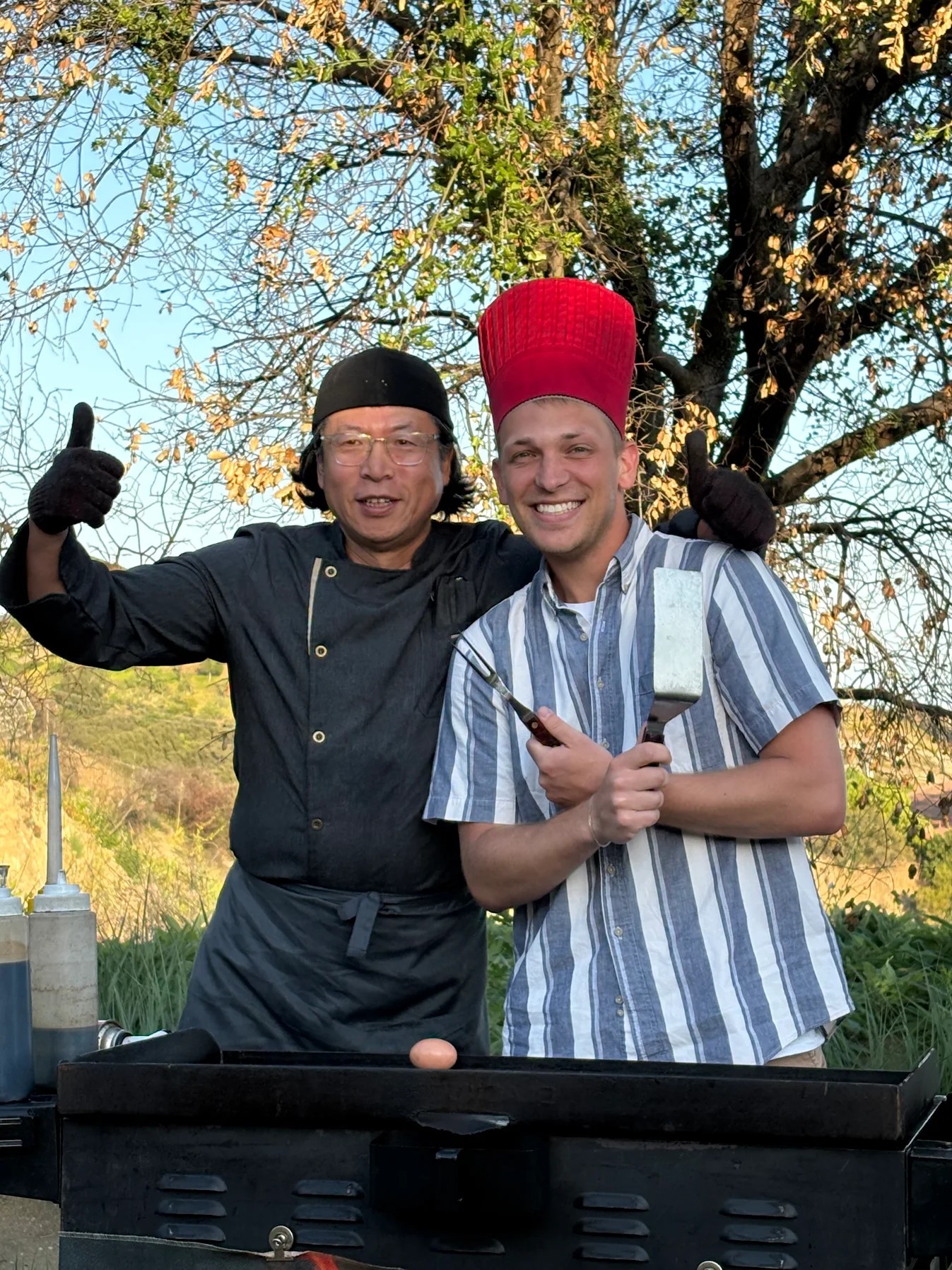
Here's what actually happens when you book private teppanyaki chef service in Palm Springs. Our team arrives 45 minutes before your scheduled start time with professional-grade equipment—a full teppanyaki grill, propane systems, prep stations, and serving materials. We assess your space, whether that's a covered patio, outdoor kitchen area, poolside setup, or indoor dining room, and configure the equipment for optimal viewing guest angles. The chef brings all ingredients already prepped and organized, maintains professional food safety standards throughout, and performs the complete teppanyaki experience: knife skills, timing coordination, interactive cooking show, and of course, exceptional food.
What differentiates authentic teppanyaki from basic "hibachi-style" cooking is technique precision. Our chefs trained in traditional Japanese teppanyaki methods understand temperature zones on the cooking surface, proper knife angles for the signature onion volcano, exact timing for protein doneness, and how to maintain entertainment value without sacrificing food quality. You're not getting someone who watched YouTube videos—you're getting culinary professionals who've spent years mastering this specific cooking style.
The Palm Springs advantage becomes obvious when you consider alternative options. Our teppanyaki catering service brings the same chef talent that high-end restaurants employ, but your group gets exclusive attention for the entire evening rather than split focus across multiple tables. Try booking a party of 12-16 at a restaurant teppanyaki grill on a Saturday night in season—you're looking at 3-4 week waits minimum, probable table splitting, rushed timing, and per-person costs that often exceed our mobile service once you factor in drinks, apps, tax, and tip.
Palm Springs' housing stock creates interesting dynamics for at-home teppanyaki that I haven't seen in other markets. The city's architectural diversity—from 1950s midcentury ranches to modern desert contemporary estates to condo developments—means we've perfected setups for drastically different environments.
Midcentury homes, which dominate neighborhoods like Twin Palms, Movie Colony, and Vista Las Palmas, typically feature those iconic indoor-outdoor transitions with sliding glass walls and covered patios. These are teppanyaki paradise. Last month I did an event at a 1962 Alexander Construction home where we set up under the breezeway connecting two wings of the house. The covered outdoor space measured about 12x14 feet, provided natural ventilation for cooking smoke, offered perfect ambient temperature in the mid-70s even though it was March, and created an intimate theater setting where all 14 guests had unobstructed views. That architectural style was designed for exactly this type of entertaining.
Contemporary desert homes—common in developments like The Tradition, Toscana, and newer construction throughout the valley—often feature outdoor kitchen infrastructure. These properties might already have built-in grills, bar seating, pergola coverage, and even outdoor refrigeration. We bring our teppanyaki equipment and integrate it into your existing setup. The benefit here is professional presentation: your outdoor entertainment space becomes a temporary Japanese steakhouse for the evening.
Palm Springs condos and smaller properties work differently but equally well. I've done successful events in 900-square-foot downtown condos by using the living room area. The key is furniture flexibility—if you can create a roughly 10x10 foot clear space and position seating in a partial circle or U-shape around it, we make it work. Vertical condos at properties like The Palms or Santiago often have balconies or rooftop access, and I've done several memorable events where we set up on a private rooftop terrace with mountain views as backdrop.
Palm Springs' typical lot sizes and property layouts mean about 70% of homes in the valley can accommodate teppanyaki setups without any modification. For the other 30%—usually smaller condos or homes with limited outdoor access—we work with your indoor space and use ventilation strategies that keep everything comfortable.
The seasonal dimension matters too. Palm Springs' snowbird population means event density shifts dramatically. October through April represents our peak season, when the valley population swells and families gather for extended winter stays. During these months, we're doing 8-12 events weekly across the Coachella Valley. Summer months (June-September) slow considerably as temperatures exceed 110°F, but we still perform indoor events and occasionally brave evening outdoor setups when clients request them.
Food quality determines teppanyaki success, and Palm Springs' location creates both challenges and opportunities for ingredient sourcing. Our approach combines local Coachella Valley produce with premium proteins sourced from the same suppliers serving Southern California's top Japanese restaurants.
The Coachella Valley produces exceptional vegetables—particularly during winter months when the desert climate is ideal for cultivation. We source bell peppers, zucchini, onions, and mushrooms from local farms when seasonally available. The difference in freshness is noticeable: a zucchini picked yesterday within 20 miles of your event cooks differently than one shipped cross-country. It has better moisture content, holds texture properly on the high-heat teppanyaki grill, and delivers superior flavor.
For proteins, we work with specialized suppliers based in Los Angeles and San Diego who focus on Japanese restaurant accounts. Our beef comes from upper-choice and prime grades, our chicken is always organic and free-range, our seafood includes sushi-grade ahi tuna, large wild-caught prawns, and fresh sea scallops. This isn't generic grocery store quality—these are the same ingredient grades that Palm Springs' upscale restaurants use, delivered to your event with proper cold chain management.
Palm Springs' food-conscious population appreciates these details. At least 40% of our valley events include specific dietary requirements: vegetarian adaptations, gluten-free requests, dairy restrictions, pescatarian preferences. Our customization capability—adjusting menus to each guest's needs while maintaining the teppanyaki entertainment experience—gives you flexibility that rigid restaurant menus can't match.
The ingredient investment also addresses something specific to Palm Springs culture. This city has sophisticated dining expectations. Residents and visitors here have access to excellent restaurants, attend food festivals, and generally know quality when they taste it. Our chef service meets that standard because we don't cut corners on sourcing. When your guests ask where the ahi tuna came from or whether the beef is prime grade, we have detailed answers because we track our supply chain carefully.
Palm Springs operates on inverse seasonality compared to most U.S. markets, and that dramatically impacts teppanyaki event planning. Understanding these patterns helps optimize your experience.
Peak season (November-April): These six months represent ideal teppanyaki weather in the valley. Daytime temperatures range from 70-85°F, evenings cool to 55-70°F, humidity stays low, and rain is rare. This is when we do 80% of our annual Palm Springs events. The snowbird population is present, families visit for holidays and spring breaks, and outdoor entertaining is effortless. Book early during these months—weekends fill up 3-4 weeks in advance, particularly around Thanksgiving, Christmas, New Year's, and the Coachella/Stagecoach festival periods in April.
Shoulder season (October and May): These transition months offer excellent value. October temperatures are still warm (90-100°F days, 70-75°F evenings), but the intense summer heat has broken. May sees temperatures rising (95-105°F) but remains manageable for evening events. We often recommend these months for budget-conscious clients because demand is lower and our calendar has more flexibility.
Summer season (June-September): Palm Springs summers are legitimately extreme, with temperatures regularly exceeding 110°F and occasionally reaching 120°F. We still perform events during these months, but 90% are indoor setups. The advantage? Vacation rental rates plummet, fewer tourists mean more privacy, and die-hard Palm Springs locals who summer in the valley appreciate the exclusivity. I've done excellent events in July and August where we set up in air-conditioned spaces, and honestly, watching a chef work a 600-degree teppanyaki grill when it's 115°F outside creates its own memorable dynamic.
Special event considerations: Palm Springs hosts major events that impact teppanyaki booking patterns. Modernism Week (February), Coachella and Stagecoach music festivals (April), and various film festivals create demand surges. If you're planning events around these dates, book 6-8 weeks ahead rather than the usual 3-4 weeks.
After four years and 347 events throughout the Coachella Valley, we've developed Palm Springs-specific expertise that generic catering companies can't replicate. We understand which neighborhoods have which typical layouts, we know seasonal ingredient availability, we've built relationships with local event planners, and we've solved problems specific to desert entertaining.
Our chef team averages 12+ years of teppanyaki experience each. These aren't culinary school graduates learning on your event—they're professionals who've worked in established Japanese steakhouses and transitioned to private events because they prefer the intimate setting and creative freedom. When a chef performs at a restaurant, they're executing the same routine 4-5 times nightly. At your home, they customize the performance to your group's energy, adjust pacing based on your timeline, and personalize the experience.
The operational difference matters too. Love Hibachi handles everything: equipment transport and setup, ingredient procurement and preparation, chef performance and cooking, serving coordination, and complete cleanup. You don't coordinate vendors, manage timelines, or handle any logistics. We arrive, transform your space, deliver the experience, and restore everything to original condition. That stress elimination is exactly what makes at-home teppanyaki superior to coordinating restaurant reservations, managing guest transportation, and dealing with parking logistics.
Insurance and licensing differentiate professional operations from amateur ones. We carry full liability insurance, workers compensation, food handler certifications, and business licensing for Palm Springs and surrounding Coachsha Valley cities. If something goes wrong—equipment malfunction, food safety issue, property damage—you're protected. Unlicensed operators offering cheaper rates often lack these protections, creating significant risk.
Certain event types particularly benefit from mobile teppanyaki service in the Palm Springs context. Based on our 347 local events, here's what works exceptionally well:
Milestone birthday celebrations represent about 35% of our Palm Springs bookings. The 40th, 50th, 60th, and 70th birthdays where guests want something memorable but sophisticated—teppanyaki delivers that balance. The entertainment keeps everyone engaged (crucial when you have mixed age groups), the food accommodates various dietary needs, and the at-home setting allows guests to relax without time pressure.
Family reunions and multi-generational gatherings work beautifully because teppanyaki appeals across age ranges. I did an event last winter for a family of 24 spanning ages 8 to 82. The kids were captivated by the knife tricks and onion volcano, adults appreciated the food quality and wine pairings, and the grandparents loved that everyone could sit together at one experience rather than being scattered across a restaurant. That universal appeal is rare in catering options.
Corporate events and team building account for about 20% of our valley bookings. Palm Springs attracts corporate retreats, and companies want activities that build camaraderie beyond standard meetings. Watching a chef perform creates shared experience and natural conversation. We've catered events for tech companies, financial firms, healthcare organizations, and creative agencies—the interactive format works across industries.
Vacation rental celebrations represent a growing category. Wealthy families rent compounds in Palm Springs for long weekends or week-long stays, and they want special dining experiences without leaving the property. We've worked at luxury rental homes throughout Rancho Mirage, Indian Wells, and La Quinta where bringing restaurant-quality food and entertainment to the rental eliminates transportation logistics for large groups.
While we're known for teppanyaki service in Palm Springs proper, our coverage extends throughout the Coachella Valley. We regularly serve clients in Cathedral City, Rancho Mirage, Palm Desert, Indian Wells, La Quinta, Indio, Desert Hot Springs, and Thousand Palms. The valley's geographic concentration means we can cover this entire area efficiently.
Travel timing matters in desert cities. Palm Springs' main corridor (Highway 111/Palm Canyon Drive) can get congested during peak season, particularly between 5-7 PM when visitors head to dinner. We account for this in scheduling, typically arriving 45-60 minutes before your event start time to ensure setup completes properly even if we encounter traffic.
For events in outlying areas—Sky Valley, Desert Edge, Cabazon—we discuss logistics during booking. These locations are absolutely serviceable, but we coordinate timing more carefully to account for the additional distance from our equipment staging area.
Our booking process is straightforward. You contact our team with your event date, expected guest count, location, and any special requirements. We provide detailed pricing based on your specific needs—guest count is the primary variable, with per-person costs decreasing as group size increases.
Typical booking timeline: Initial inquiry → Price quote within 24 hours → Menu customization discussion → Deposit to secure date → Final headcount confirmation 5 days before event → Event execution. The entire process takes 15-20 minutes of your actual time; we handle all details.
Our all-inclusive pricing model eliminates surprise charges and hidden fees that plague traditional restaurant bills. You know the exact cost upfront, and that includes chef service, all ingredients, equipment, setup, entertainment, and cleanup. The only variable is guest count, and we accommodate last-minute adjustments within reason.
Payment structure: 50% deposit secures your date, remaining balance due 48 hours before the event. We accept all major credit cards, and you can review our menu options and packages before booking to ensure our offerings match your preferences.
How much does teppanyaki catering cost in Palm Springs?
Our Palm Springs pricing typically ranges from $85-125 per person depending on menu selection and guest count. Groups of 10-15 people land around $95-110 per person, while larger parties of 20-30 people benefit from volume pricing closer to $85-100 per person. This includes everything: premium proteins (filet mignon, lobster tail, jumbo shrimp options), fresh vegetables, fried rice, chef performance, all equipment, setup, and cleanup. Compare this to Palm Springs Japanese steakhouse pricing where entrees alone run $45-75 before appetizers, drinks, tax, and gratuity—our comprehensive service often costs less per person while delivering superior experience.
What space do you need for setup?
Minimum space requirement is approximately 10x10 feet (100 square feet) for the teppanyaki grill and chef working area. Ideal setup includes this cooking zone plus seating arranged in a U-shape or semicircle around it so guests have clear views. We've successfully operated in spaces as compact as Palm Springs condos and as expansive as estate backyards. Indoor or outdoor both work—the primary requirement is level ground and adequate ventilation. For outdoor setups, we prefer covered patios or areas with some shade structure, though we can adapt to fully open spaces if needed.
What happens if there's unexpected weather?
Palm Springs' weather is remarkably predictable—we've experienced event-day rain fewer than five times in four years of service. That said, we always have contingency plans. For outdoor events with rain risk, we discuss backup indoor locations during booking. Wind is actually more common than rain in the desert; if conditions exceed safe operating limits (sustained winds above 20 mph), we can modify setup with windscreens or move indoors. Our equipment is weather-resistant and built for outdoor use. Summer heat is managed through timing—evening events when temperatures drop from peak—and we ensure proper hydration for our chef team.
Can you accommodate dietary restrictions and menu customization?
Absolutely, and this is where private teppanyaki service excels compared to restaurants. We routinely adapt menus for vegetarian, vegan, gluten-free, dairy-free, pescatarian, and kosher requirements. During booking, we collect dietary information for each guest and prepare accordingly. Our chef brings separate ingredients, uses dedicated cooking surfaces if needed for allergies, and maintains strict protocols to prevent cross-contamination. You can customize protein selections (substitute chicken for steak, add extra lobster, exclude certain items), adjust spice levels, modify sauces, and request specific vegetables. This personalization is why Palm Springs clients who've tried both restaurant and at-home teppanyaki overwhelmingly prefer the private experience.
How far in advance should we book?
For peak season (November-April) weekend dates, book 3-4 weeks ahead. Weekday availability is typically better with 2-3 weeks notice sufficient. Holiday periods (Thanksgiving week, Christmas through New Year's, Easter weekend) and major Palm Springs events (Modernism Week, Coachella/Stagecoach festivals) book 6-8 weeks in advance. Summer months (June-September) have more availability—you can often book 1-2 weeks out. That said, we've accommodated last-minute requests with as little as 48 hours notice when our schedule permits. If you have specific date requirements, earlier booking ensures availability.
The fundamental value proposition comes down to this: No reservations, no parking, no splitting checks, no rushed timing, no driving after wine, no shouting over noise. You get the experience tailored to your group's preferences in an environment you control. private teppanyaki delivers restaurant-quality food, professional entertainment, and personalized service in your preferred setting without the hassles of restaurant dining.
For Palm Springs specifically, the lifestyle alignment is perfect. This is a city built around home entertaining, indoor-outdoor living, and creating memorable experiences. Teppanyaki catering fits naturally into how people here celebrate occasions. The weather cooperates 9-10 months annually, the architecture supports it, and the culture values it.
Ready to bring authentic teppanyaki to your Palm Springs event? Contact Love Hibachi to discuss your specific needs and receive a detailed quote. We're here to make your celebration extraordinary.
Teppanyaki dining in Palm Springs takes on a whole new dimension when the flat iron grill comes to you. Love Hibachi's teppanyaki chefs have performed at estate properties in the Movie Colony, intimate garden spaces in the Smoke Tree Ranch area, and modern desert architectural homes throughout the Twin Palms neighborhood. The sizzle of sake-kissed proteins, the rhythmic clang of spatulas, and the aromatic rise of garlic butter in the dry desert air create an atmosphere that no restaurant can replicate. Teppanyaki at home in Palm Springs isn't just dinner it's an event unto itself.
The desert wind can occasionally pick up in the late afternoon ask your chef about windscreen setup options for the grill to ensure consistent cooking temperatures and a safe, uninterrupted teppanyaki performance.
Book your teppanyaki experience


Love Hibachi · Private Hibachi Chef Catering · 7am-10pm Daily
Also serving: Boca Raton FL · Brevard FL · Broward FL · Delray Beach FL · Fort Lauderdale FL · Jupiter FL · Miami Dade FL · Orange FL · Orlando FL · Osceola FL · Palm Beach FL · Austin TX · Collin TX · Dallas TX · Denton TX · Ellis TX · Fort Worth TX · Galveston TX · Harris TX · Houston TX · Tarrant TX · Travis TX · More Areas

